Showing posts with label mobile telephones. Show all posts

Friday, June 18, 2010

Cell Site Analysis - Criminal Case

Cell Site Analysis - Criminal Case

IN HER MAJESTY'S COURT OF APPEAL IN NORTHERN IRELAND
Neutral Citation no. [2008] NICA 5
THE QUEEN v RICHARD DAVID McCARTAN and BARRY DAVID SKINNER.

Appeal Court: Kerr LCJ, Campbell LJ and Morgan J

http://www.courtsni.gov.uk/NR/rdonlyres/4F39A7FC-5350-4E4B-BB76-FA8DC4BA08D6/0/j_j_KER7057Final.htm


It is not proven with cell site analysis that evidence obtained relating to mobile call records, the Masts and their details associated with handling the calls and conducting radio test surveys combined together form a precise indication of the geographical location of a mobile telephone at the material time. Therefore, it is unlikely an alleged opinion that it is consistent to place a mobile telephone at a particular location holds weight. That cell site analysis might generally indicate the possible movement of a mobile telephone in relation to Masts that it used and no more.

Whilst the Appeal Case for the appellants (McCartan and Skinner) did not succeed it was not because cell site analysis was able to pinpoint the location of the appellants' mobile telephones, which it is unable to do, but the appellants' failure to identity what was happening with their mobile telephones at the material times. The following commentary from this Appeal Case is worth reading.

'The cell site analysis

[37] An expert in this field, David Sanderson, gave evidence, submitted a report on the subject and made a Power Point presentation to the court. Mr Fee suggested that Mr Sanderson’s evidence established that (a) call mapping was carried out in respect of telephone 008 (attributed to Mr McCartan) and telephone 301 (attributed to Mr Skinner); (b) call mapping provides an approximate indication of where a mobile phone was when a call was made; (c) call mapping is used primarily to show the likely movement of a cellular phone with a general indication of location; (d) the cellular phone may be anywhere within the best serving coverage of the sector; (e) there is boundary overlap between sectors served by different masts; (f) the extent of the best serving coverage sector is unknown; (g) the indication of movement of the person using the telephone is no more than consistent with a suggested pattern of progress – it cannot establish positively that the user of the telephone in fact moved in the mooted direction; (h) calls 15, 16 and 17 from 008 at 20.53: 20.55: 20.55 were made when the telephone was not in the vicinity of Euston Street.

[38] On the basis of this evidence Mr Fee argued that the cell site analysis did no more than provide a very imprecise indication of general movements. In the absence of a capacity to identify a precise location of the telephone within the area of best coverage it was not possible to provide any precise indication of travel direction. We are disposed to accept that Mr Fee has correctly identified the limitations that apply to the cell site analysis. As he has acknowledged, however, it does provide a general indication of the movements of the users of the telephones. If the appellants followed a different pattern of movements on the day in question, it was open to them to give evidence about those movements and to explain where they had been at the critical time in relation to the shooting. Their failure to do so, combined with the general indication that the cell site analysis provided, constituted strong evidence against them that their movements were as indicated by that analysis. In Mr McCartan’s case, his inquiry of the interviewing police officers as to how precisely he could be tied down to a particular area was also, in our judgement, extremely telling.'

The comments of the Appeal Court in para [38] suggests the appellants' own lack of self-preservation to state what their mobile telephones were doing and the reasons for going in a direction following the line of Masts used for handling calls, undermined the cell site analysis element of their appeal.

Thursday, December 03, 2009

First case using wireless communications - history

First case using wireless communications - history
.
Photo courtesy of executedtoday.com
.
At the first UK MTEB Mobile Forensics Conference 2009, last week (25th/26th Nov), the speaker Adam Gersch (Barrister 23 Essex Street) provided the audience with a refreshing reminder of the first case in the UK that made use of wireless telegraphy communication evidence in criminal proceedings noted in the landmark case of Dr (Hawley Harvey) Crippen. Dr Crippen was caught whilst escaping onboard a ship crossing the Atlantic Ocean by the eagle-eyed Ship's Captain who suspected two passengers travelling under the name of 'John Robinson' to be Crippen and his girlfriend (dressed as a boy) as the ‘cellar-murder fugitive and his friend’ wanted by the Police and on the run.
.
In the nick of time the Ship's Captain sent a wireless telegram to the authorities before the ship would be out of radio range for ship-to-shore wireless communications to let them know of their presence on board his ship. Dr Crippen was found guilty at trial and was executed at Pentonville Prison on the 23rd November 1910.
.
Links to background of Dr Crippen Case:
.
As an analogy, perhaps a wireless telegram back then would most probably equate today as a wireless telegraphy SMS text message (in terms of mobile telephones). This case is a useful reminder of the importance radio provided back then and still today mobile communications new and exciting evolution continues to provide important communication services, infrastructure and networks, nationally and internationally.
.
Mobile Communications Science History:
Of course, the mobile telephone's use of wireless telegraphy has its roots in scientific history long before the hybrid computer was even dreamt about:
.
- 1868: James Clerk Maxwell postulates EM wave phenomenon ethereal wind theory
- 1886: Heinrich Rudolf Hertz establishes proof of EM wave (Hertz cycle)
- 1893:Gugliemo Marconi first use of wireless and first patent of wireless communications
- 1905: Reginald Fessenden first transmission of speech and music via a wireless link
- 1908: Nathan B. Stubblefield invented and patented the first mobile telephone over 100-years ago
- etc
.

Friday, May 22, 2009

3-D TV on Mobile Phones

3-D TV on Mobile Phones


.
This is an interesting European funded research project which began January 2008 called MOBILE3DTV. The purpose of the project is to demonstrate the viability of the new technology of mobile 3DTV. The project develops a technology demonstration system for the creation and coding of 3D video content, its delivery over DVB-H (Digital Video Broadcasting - Handheld) and display on a mobile device.
.
Historical background
Despite the images it evokes of high-tech wizardry, rudimentary 3-D technologies have been around practically since the dawn of filmmaking. The first ever attempt came in 1890, when the British film pioneer William Friese-Greene invented a process in which two films were projected side by side on screen, and the viewer looked through a stereoscope to converge the two images. As early as 2003, Sharp launched a 3-D mobile phone in Japan and Korea’s SK Telecom launched a 3-D phone – from Samsung – in 2007, and Japan’s Hitachi just launched one in 2009. Apple’s iPhone also supports three-dimensional television, but can currently only be viewed with special glasses. Mobile3DTV is developing the core elements of the next generation of three-dimensional television for mobile devices.
.
Technical specifications
The major challenge has been choosing the optimal format for representing 3-D video for mobile delivery and for that reason, the project decided to build its system around the EU standard known as Digital Video Broadcasting – Handheld (DVB-H). Further challenges to provide comfortable and enjoyable 3-D viewing were overcome by employing what is being termed as the so-called "auto-stereoscopic displays". In essence the displays apparently remove the need to wear those awkward Blue Lense/Red Lense cardboard glass that are dished out in childrens magazines that gives the viewer of an image that look elevated and solid from off the page.
.
According to the research “Auto-stereoscopic displays use additional optical elements aligned on the surface of an LCD, to ensure that the observer sees different images with each eye.” Moreover, as mobile devices are normally watched "by a single observer, two independent views are sufficient for satisfactory 3-D perception.”
.
ICT Results EU Research material here:
.
Further research material here:

Tuesday, July 15, 2008

Join MTEB Forum if your are in wireless / telecomms

Join MTEB Forum if your are in wireless / telecomms

.
If you work in forensics and/or examination devices, investigations or deal with evidence then the MTEB forum puts you in contact with other professionals when you need help with technical issues, technical discussions or generally want to stay up to date. Due to the make up of the forum members: experts, high level security, law enforcement and senior investigators requests to join are vetted.
.
.
Invitation to Join Mobile Telephone Examination Board
--------------------------------------------------------
The MTEB forum is dedicated to evidential standards, forensic examination and lawful interception dealing with mobile telephones/SIM/USIM/MMC, bluetooth, IrDA, USB, cell site analysis and mobile networks GSM, CDMA, 3G, 4G.
.
Link if you are NOT a LinkedIn member:

http://www.linkedin.com/groupInvitation?groupID=141739&sharedKey=35E59F107179

Link if you are a LinkedIn member:
http://www.linkedin.com/groupsDirectory?results=&sik=1216135556335

Join MTEB Forum if your are in wireless / telecomms

Join MTEB Forum if your are in wireless / telecomms

.
If you work in forensics and/or examination devices, investigations or deal with evidence then the MTEB forum puts you in contact with other professionals when you need help with technical issues, technical discussions or generally want to stay up to date. Due to the make up of the forum members: experts, high level security, law enforcement and senior investigators requests to join are vetted.
.
.
Invitation to Join Mobile Telephone Examination Board
--------------------------------------------------------
The MTEB forum is dedicated to evidential standards, forensic examination and lawful interception dealing with mobile telephones/SIM/USIM/MMC, bluetooth, IrDA, USB, cell site analysis and mobile networks GSM, CDMA, 3G, 4G.
.
Link if you are NOT a LinkedIn member:

http://www.linkedin.com/groupInvitation?groupID=141739&sharedKey=35E59F107179

Link if you are a LinkedIn member:
http://www.linkedin.com/groupsDirectory?results=&sik=1216135556335

Sunday, February 17, 2008

Cell Site Analysis

Cell Site Analysis

IN HER MAJESTY'S COURT OF APPEAL IN NORTHERN IRELAND
Neutral Citation no. [2008] NICA 5
THE QUEEN v RICHARD DAVID McCARTAN and BARRY DAVID SKINNER.

Appeal Court: Kerr LCJ, Campbell LJ and Morgan J

http://www.courtsni.gov.uk/NR/rdonlyres/4F39A7FC-5350-4E4B-BB76-FA8DC4BA08D6/0/j_j_KER7057Final.htm


It is not proven with cell site analysis that evidence obtained relating to mobile call records, the Masts and their details associated with handling the calls and conducting radio test surveys combined together form a precise indication of the geographical location of a mobile telephone at the material time. Therefore, it is unlikely an alleged opinion that it is consistent to place a mobile telephone at a particular location holds weight. That cell site analysis might generally indicate the possible movement of a mobile telephone in relation to Masts that it used and no more.

Whilst the Appeal Case for the appellants (McCartan and Skinner) did not succeed it was not because cell site analysis was able to pinpoint the location of the appellants' mobile telephones, which it is unable to do, but the appellants' failure to identity what was happening with their mobile telephones at the material times. The following commentary from this Appeal Case is worth reading.

'The cell site analysis

[37] An expert in this field, David Sanderson, gave evidence, submitted a report on the subject and made a Power Point presentation to the court. Mr Fee suggested that Mr Sanderson’s evidence established that (a) call mapping was carried out in respect of telephone 008 (attributed to Mr McCartan) and telephone 301 (attributed to Mr Skinner); (b) call mapping provides an approximate indication of where a mobile phone was when a call was made; (c) call mapping is used primarily to show the likely movement of a cellular phone with a general indication of location; (d) the cellular phone may be anywhere within the best serving coverage of the sector; (e) there is boundary overlap between sectors served by different masts; (f) the extent of the best serving coverage sector is unknown; (g) the indication of movement of the person using the telephone is no more than consistent with a suggested pattern of progress – it cannot establish positively that the user of the telephone in fact moved in the mooted direction; (h) calls 15, 16 and 17 from 008 at 20.53: 20.55: 20.55 were made when the telephone was not in the vicinity of Euston Street.

[38] On the basis of this evidence Mr Fee argued that the cell site analysis did no more than provide a very imprecise indication of general movements. In the absence of a capacity to identify a precise location of the telephone within the area of best coverage it was not possible to provide any precise indication of travel direction. We are disposed to accept that Mr Fee has correctly identified the limitations that apply to the cell site analysis. As he has acknowledged, however, it does provide a general indication of the movements of the users of the telephones. If the appellants followed a different pattern of movements on the day in question, it was open to them to give evidence about those movements and to explain where they had been at the critical time in relation to the shooting. Their failure to do so, combined with the general indication that the cell site analysis provided, constituted strong evidence against them that their movements were as indicated by that analysis. In Mr McCartan’s case, his inquiry of the interviewing police officers as to how precisely he could be tied down to a particular area was also, in our judgement, extremely telling.'

The comments of the Appeal Court in para [38] suggests the appellants' own lack of self-preservation to state what their mobile telephones were doing and the reasons for going in a direction following the line of Masts used for handling calls, undermined the cell site analysis element of their appeal.

Saturday, June 16, 2007

China Mobile Telephones

China Mobile Telephone Exports
It wasn't difficult to guess that with China's industrial revolution into manufacturing everything and its growth markets in mobile telephones that China would aim to compete with the world's best known handset brandnames, such as Nokia, Motorola, Samsung, SonyEricsson, Alcatel, Sagem etc. I thought it might be helpful for mobile telephone examiners to be aware of the new China mobile telephone imports and publish a list of new arrivals of mobile telephones from China. The list is not exhaustive and covers those models that are available now. All of these handsets are operating in the frequency ranges of: 900MHz, 1800MHz and 1900MHz.

A818 Multi-media Phone +Bluetooth
BEST D2000 Multi-media Phone
BOEING 777 Dual SIM Card Phone
BELLWAVE 830 Dual SIM Card Phone
CECT Q500
CECT C1000+ Dual SIM Card Phone
CECT 1000D
CECT A800
CECT Jie Bao
CECT N90 Dual SIM Card Phone
CECT V8 Multi-media Phone + Bluetooth
CECT Q500 Dual SIM Card Phone + Bluetooth
CECT N538 Dual SIM Card Phone
CECT 1000D Dual SIM Card Phone
CECT A800 Dual SIM Card Phone + Bluetooth
CECT A706-2 Dual SIM Card Phone + Bluetooth
CECT N95 Dual SIM Card Phone + Bluetooth
CECT Y890 Dual SIM Card Phone
CECT C1000I Dual SIM Card Phone
CECT W958 Multi-media Phone
CECT N788 Multi-media Phone
CECT C99 Dual SIM Card Phone
CECT Q500 Dual SIM Card Phone
CECT N55 Multi-media Phone
CECT A900 Dual SIM Card Phone + Bluetooth
CECT V007 Multi-media Phone
CoolPAD 728B GSM + CDMA
CoolPAD 298 GSM + CDMA
CoolPAD 288 GSM + CDMA
HUI FENG 666 Multi-media Phone
HUI BAO 520 Dual SIM Card Phone + Bluetooth
ICOOL D66 Dual SIM Card Phone + Bluetooth
JIN SHA A203 Dual SIM Card Phone
JIA XIN N95 Dual SIM Card Phone + Bluetooth
K007 Multi-media Phone + Bluetooth
KAI RUI 666 Multi-media Phone
KAI RUI 169 Multi-media Phone
LANG XING M558 Dual SIM Card Phone
Long Run L821 Dual SIM Card Phone + Bluetooth
Ma Bao 99 Dual SIM Card Phone
NCKIA E95 Dual SIM Card Phone + Bluetooth
O3 838 Multi-media Phone + Bluetooth
Qi Tai X689+ / ZT 68 Dual SIM Card Phone + Bluetooth
San Sunc N96 Dual SIM Card Phone + Bluetooth
TIAN Long 788 Multi-media Phone
TIAN SHI XING T900 Dual SIM Card Phone
Ya Qi Yi Hao Dual SIM Card Phone + Bluetooth
Zhong Than 199 Dual SIM Card Phone + Bluetooth
ZT 988 Dual SIM Card Phone
ZTC 988 Multi-media Phone
ZTC C2000 Dual SIM Card Phone

Tuesday, April 03, 2007

File Signatures Mobile Phone & Computer Forensics

File Signatures Mobile Phones & Computer Forensics
FILESIG MANAGER

Given the ever growing list of file signatures needed when drilling down into imaged data to determine varying file types that may be recorded in the data can be a real pain if, like me, you create every growing lists of file signatures copied and pasted into notepad documents. The raw data I see from imaging mobile telephones, SIM/USIM, Smart/MMC cards and hard disc drives means that I need to retain a single database for all the file signatures captured. I have found a great little tool called Filesig Manager, created by Tim Coakley (www.filesig.co.uk), which is a "file signature and keyword management tool, acting as an examiner's central repository of File Identification information." Importantly, not only does it work very well, but it's FREE.


Screen Image 1

The screen image 1 illustrates a range of captured file signatures stored in the database that includes file extensions, description and category of file and in addition fields that contain data for segments and offsets used by other computer forensic products. The database comes with some pre-defined file signatures, which are the most common and most useful and the user can enter their own file signatures as and when they are discovered.
Typically, file signatures usually contain the first eight bytes and last four bytes of a file. Below are some examples of common file signature types I have recovered following imaging of mobile phones and MMC cards saved and deleted data.
Header...........................................Footer...................Extension
[FF D8 FF E0 00 10 4A 46]........[A4 83 FF D9]......[.JPG]
[30 26 B2 75 8E 66 CF 11].........[23 AE 00 00].......[.WMA]
[FF FA 61 C0 EA 3D 00 00].......[00 00 00 00]........[.MP3]
[00 00 00 14 66 74 79 70]...........[31 31 31 30]........[.3GP]
[47 49 46 38 39 61 18 01]...........[00 00 00 00]........[.GIF]
[52 49 46 46 AC D3 01 00].........[0D 0A 0D 0A].....[.WAV]
It is worth mentioning that some signatures use a Header that does not require all 8 bytes to be used. For example, .JPG file signatures are commonly referenced with a Header FF D8 FF E0 or FF D8 FF E1.

Screen Image 2
The screen image 2 illustrates file extensions and description of file extension as a look-up table.

Thursday, February 01, 2007

Master Password Unlock

Master Password Unlock

I have received requests for copies of the 2006 supplement edition of Mobile Telephone Evidence (MTE) Newsletter Vol4-MTE-03-2006 supp: 002 regarding Master Password Unlock for Nokia mobile telephones.

http://www.filebucket.net/files/1597_knksh/Handset%20Password%20Unlock.rar

Thursday, January 04, 2007

Cell Site Analysis EMTE Training Course 2007


Cell Site Analysis EMTE Training Course 2007

Understand the core elements involved in the GSM mobile telephone network and how when combining their use can be used to assist determine geographical location of a mobile telephone for criminal cases and investigation purposes.

Download a copy of the data sheet content for our Cell Site Analysis EMTE Training Course to be run in February and March 2007. Places are limited, as only 10 delegates can attend per course. This is a three day course.

http://rapidshare.com/files/10241385/Cell_Site_Analysis_EMTE_Training_Course_2007.pdf.html

Downloading from Rapidshare:
1. Click the above URL link or copy and paste into browser address bar
2. Go to bottom of Rapidshare html page displayed and click box that says FREE
3. Enter the four alphanumeric code into box that says "here"
4. Click Download (that also displays mirror site from which download is being obtained)
5. File download dialogue box appears, choice Open or Save

Wednesday, November 29, 2006

Switch On, Update, Lose Evidence

Switch On, Update, Lose Evidence

The focus of this article relates to what can happen when switching on a mobile telephone and how data can change on a SIM Card. Essentially how a mobile telephone updates a SIM card relating to location data is down to how each make and model of mobile telephone has been programmed. When dealing with location data in SIM Cards it should not be assumed that every make/model updates location data immediately or within a prescribed period. Certain events trigger location update data and therefore it is important to determine on a case by case basis how a mobile telephone and its SIM card should be examined.

I have received several comments from different sources saying that they found location data was not updated when the mobile telephone was held within a shielded device or bag. This is fine, but it has been found that data can change in such environments and it is not the case that it was only a few times, but the fact that it happened at all can mean unilaterally ignoring that such an event (loss of data) might occur may mean losing vital evidence.

A best practise methodology has been outlined in the article for those that wish to follow it and the justification for using such a stated methodology.

http://www.filebucket.net/files/1579_ov3rx/Switch%20On%20Update%20Lose%20Evidence%20.pdf

Switch On, Update, Lose Evidence

Switch On, Update, Lose Evidence

The focus of this article relates to what can happen when switching on a mobile telephone and how data can change on a SIM Card. Essentially how a mobile telephone updates a SIM card relating to location data is down to how each make and model of mobile telephone has been programmed. When dealing with location data in SIM Cards it should not be assumed that every make/model updates location data immediately or within a prescribed period. Certain events trigger location update data and therefore it is important to determine on a case by case basis how a mobile telephone and its SIM card should be examined.

I have received several comments from different sources saying that they found location data was not updated when the mobile telephone was held within a shielded device or bag. This is fine, but it has been found that data can change in such environments and it is not the case that it was only a few times, but the fact that it happened at all can mean unilaterally ignoring that such an event (loss of data) might occur may mean losing vital evidence.

A best practise methodology has been outlined in the article for those that wish to follow it and the justification for using such a stated methodology.

http://www.filebucket.net/files/1579_ov3rx/Switch%20On%20Update%20Lose%20Evidence%20.pdf

Thursday, November 23, 2006

Mobile Phone Vouchers

Interesting November 2005 newsfeed. Not sure whether this is a compliment to mobile phones grip in the maketplace or an insult indicating that mobile phones are a desperate, last resort.

Azahari's group 'selling phone cards' to survive
A terrorist group once led by master bombmaker Azahari Husin is struggling for funds and now depends on selling mobile phone vouchers to get by, Indonesia's police chief said on Monday.

http://www.abc.net.au/news/newsitems/200511/s1513116.htm

Friday, November 17, 2006

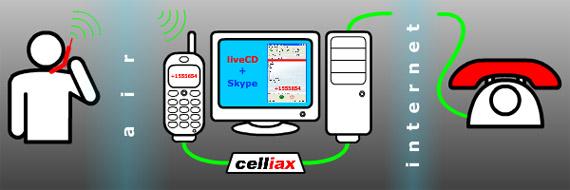
Celliax Developers LiveCD 0.0.32

Celliax Developers LiveCD 0.0.32


GSM CDMA cellular driver, Skype cellphone calls support, via chan_celliax and hardware adapter. Works with Linux & WinXP
NOTICE: Before installing check any downloads for virus etc. Also read the instructions and supporting technical help links.
Here are some links:

Wednesday, November 15, 2006

Smith's LND Dilemma

Smith's LND Dilemma

In real cases of mobile 'phone and SIM Card examination, as opposed to theoretical discussion about them, entries found in elementary file Last Number Dialled (EFLND) on a SIM Card can be quite complex to determine and today do not have a clearly defined pattern as to the origin of data, as one might think is suggested by the GSM Standard 11.11. This is largely due to misunderstandings as to the interpretation to be given to relevant clauses within the Standard and what they actually mean. There is some commentary in the Standard which provides for minimal comprehension of possible origin of data in LND, but not nearly enough for my work.

Back in the early 1990s there was an considerable amount to be learnt about GSM SIM cards and I needed a way that I could at least comprehend how data was being shared and recorded in elementary files (EF) in the SIM. As data was being recorded in the elementary files Last Number Dialled (EFLND) which appeared to be from origins other than from within the SIM by 2002, this meant a re-think of a simple 'problem' algorithm I had written back in 1995, which was titled "Smith's LND Dilemma", so titled for copyright reasons.

As mentioned above, the early algorithm was written relating to data generated in EFLND internally to the SIM and the 2003 update I did included possible arguments for external sources for generation of the data. I updated Smith's LND Dilemma to consider where less restrictive assumptions are considered regarding determining LND entries, the investigation uncovers a more complex series of potential events and appears as a non-complete combinational problem, due to some undefined sources. The undefined sources are used for investigation having first investigated common sources where data is known to originate. The undefined sources were, in essence, a precaution by me to cover myself where sources occurred from uncommon or a new implementations in SIM, or simlar from external sources, such as mobile telephones. Also, I needed to consider the issue of programs that can generate data on SIM Cards. I didn't wish to be confined by identifying particular program/s.

I have reproduced the main part of Smith's LND Dilemma and cut out coding remarks and other bits etc, which make for uncomfortable reading and comprehension. Well I hope this helps examiners, or newbies to our branch of forensic science, regarding investigating mobile telephone evidence. This is just the tip of the iceberg .

Smith's LND Dilemma
#
# Makefile for Smith's LND Dilemma (c) by Gregory N Smith
#
.
.
.

Where (
Entries = 3F00+2FE2+7F10+6F44+6F4A
)
if (
and 7F20+6F38+7F10+6F3D = allocated+activated+string
)
Where origin needs to be known (
If 7F10+6F3D+6F44+6F3A+6F40+6F4A
)
and/ (
If 7F10+6F3D+6F44+6F4A+6F42
)
/or (
If 7F10+6F3D+6F44+6F3B(6F3A+6F40+6F42+6F4A)+6F4B
)
/or (
If 7F10+6F3D+6F44+6F49+6F4C
)
/or (
If 7F10+6F3D+6F44+6F4D(6F44+6F3A+6F40+6F42+6F49+6F4A+6F4B+6F4C)+6F4E
)= Entries

However, where (
Entries = 3F00+2FE2+7F10+6F44+6F4A
)
If (
and 7F20+6F38+7F10+6F3D = allocated+activated+string
)

Where origin needs to be known (
If +CGMI+CGMM +CGSN
)
If (
and/ +CLCC+7F10+6F3D+6F44+6F4A
)
If (
/or +CPBS(+CPBR)+7F10+6F3D+6F44+6F4A
)
If (
/or +CMGL(+CPMR)+7F10+6F3D+6F44+6F4A
)= Entries

Alternatively, where (
Entries = 3F00+2FE2+7F10+6F44+6F4A
)

if (
and 7F20+6F38+7F10+6F3D = allocated+activated+string
)
Where origin needs to be known (
and/ undefinedsource+7F10+6F3D+6F44+6F4A
)= Entries
(c) Gregory N Smith 1995-2006

Tuesday, November 07, 2006

Electricity generator in your backpack

Electricity generator in your backpack

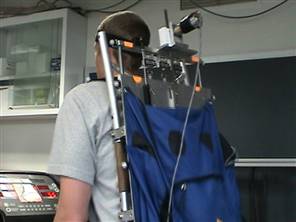
Here is an interesting big gadget. As any professional examiner of mobile telephones will know being called to deal with onsite examination where no electricity is available can be a nightmare. Lugging back power supplies can be a pain, particularly if having to move between locations. This device may bring some relief although it may not look attractive.

Developed following hurricane Katrina (2005), the backpack has been designed to "assist first responders and disaster relief workers to generate their own electricity for communications devices, night vision goggles, water purifiers or other crucial, portable electronics", according to http://msnbc.msn.com/id/9245155/.

I can see it having application under certain conditions, however, expect some frowns if any mobile 'phone examiners turn up at court wearing one..