This is my first technology post for a while at trewmte blogspot as my time in research now extends to 5G-NR; network investigations; connected cars and autonomous vehicles; drones; in addition to existing digital forensics, smartphone examinations and cell site analysis. I have a number new insights and revelations for readers this year about the aforementioned subjects. So I will be more active on the blog.
5G False Base Stations (Part 1)
With 5G-NR (new radio) now in limited use and operators in pursuit to increase its usage and, at some point, replace 2G and 3G, it has not escaped the notice of those creating mobile and data networks the need for security. Given the slew of research into networks and devices susceptible to MiTM (man-in-the-middle) attacks it isn't a surprise to find forum conversations about possible attacks by 5G-NR false base stations.
As a quick technical reference for a 5G-NR base station it is defined by "gNB" = g that it is directing communications and signalling to a 5G network via an NB = Node B (the base station). This quick reference does not replace or take precedence over the definition 5G-NR base station as recorded in the 3GPP Standards; so always refer to the standards as your reference point as my comments are evangelistic-observations on the subject and those observations are made to quickly shoehorn readers into this discussion.
Other Side of the Coin
Some may think that little has been done by network operators/standards bodies confirming measures taken to assuage mobile users that once a false base station is in use (MiTM) that nothing can be done and an attack or crime succeeds un-impeded. This is not only wrong and misguided viewpoint, worst still it would be untrue. As an example of just one deployable security method there is a case for active participation (not visible to the mobile user) between the UE (user equipment) and the network termed "UE-assisted network-based detection of false base station".
Preamble
The UE in RRC_CONNECTED mode sends measurement reports to the network in accordance with the measurement configuration provided by the network. These measurement reports have security values in being useful for detection of false base stations or SUPI/5G-GUTI catchers (as an example IMSI catchers). Mobile network operators, using an implementation specific process/procedure, may choose UEs or tracking areas or duration for which measurement reports are to be analysed for detection of false base station. So measurement reports from UEs can be used for detection of false base station, and some additional actions thereafter.
What Type of Content is in a Measurement Report
Examples given are the received-signal strength and location information in measurement reports can be used to detect a false base station that attract UEs which it does by transmitting signal with higher power than those genuine base stations surrounding the UEs.
Measurement reports can also be used to detect a false base stations that replays genuine information blocks (MIB/SIB) without modification. In order to detect a false base station which replays modified version of broadcast information to prevent victim UEs from switching back and forth between itself and genuine base stations (e.g. modifying neighbouring cells, cell reselection criteria, registration timers, etc. to avoid the so called ping-pong effect), information on broadcast information can be used to detect inconsistency from the deployment information.
It is known a false base station which uses inconsistent cell identifier or operates in inconsistent frequency than the deployment of the genuine base stations can be detected respectively by using the cell identifier or the frequency information in the measurement reports.
Moreover, MiTM attackers deploying a false base station may deploy rogue UEs to assist in the attack by attempting to trick the network. Measurement reports collected from multiple UEs in an area can be used to filter out incorrect reports sent by a potential rogue UE.
It doesn't automatically follow when reading forum posts or discussions about attackers and false base stations that they (both) are somehow undetectable.
I will be posting more on this subject given this is Part 1).
Monday, April 22, 2019

Thursday, November 15, 2018
BREXIT Draft Agreement
Draft Agreement on the withdrawal ofthe United Kingdom of Great Britainand Northern Ireland from theEuropean Union and the EuropeanAtomic Energy Community
14 November 2018
This post is not for political viewpoint nor is it to encourage or solicit political opinions or debate.14 November 2018
For those who are involved in evidence, forensic examinations and/or investigations, if you wish to read the text in the Draft Agreement:
TITLE V
ONGOING POLICE AND JUDICIAL COOPERATION IN CRIMINAL MATTERS
ARTICLE 62
Ongoing judicial cooperation proceedings in criminal matters
See Pages 103-109
ARTICLE 63
Ongoing law enforcement cooperation proceedings, police cooperation and exchange of information
See Pages 110-114
ARTICLE 64
Confirmation of receipt or arrest
See Pages 115-116
ARTICLE 65
Other applicable Union acts
See Page 116
There is also a huge section on cooperation in Civil Matters.
The BREXIT Draft Agreement 14/11/18 can be downloaded here:
https://assets.publishing.service.gov.uk/government/uploads/system/uploads/attachment_data/file/756374/14_November_Draft_Agreement_on_the_Withdrawal_of_the_United_Kingdom_of_Great_Britain_and_Northern_Ireland_from_the_European_Union.pdf
Sunday, November 04, 2018
Armistice Day Sunday 11th November 2018
It is said "Lest We Forget".
I now say "How We Remember"

As this is a telecommunications technical blog readers might find it useful to remember the different forms of communications techniques used during World War 1. An excellent website for this information and also displays of wireless devices that played an important part during WW1 can be found here:
The Royal Signals Museum
https://www.royalsignalsmuseum.co.uk/ww1-ww2-communications/
See also: Victorian Texting https://trewmte.blogspot.com/2010/01/victorian-texting.html
Related Remembrance Day Posts:
https://trewmte.blogspot.com/2011/11/11th-hour-of-11th-day-of-11th-month.html
https://trewmte.blogspot.com/2014/06/d-day-6th-june.html
https://trewmte.blogspot.com/2011/06/d-day-6th-june.html
https://trewmte.blogspot.com/2017/11/100-years-remembrance-day-11112017.html
https://trewmte.blogspot.com/2010/11/field-of-remembrance.html
Wednesday, September 19, 2018
Excellent Career at MI5
Excellent career opportunities with the UK's leading Security Service MI5.

https://www.mi5.gov.uk/careers/opportunities/digital-intelligence-operations

https://www.mi5.gov.uk/careers/opportunities/digital-intelligence-operations
Saturday, July 07, 2018
Update - HERREVAD Databases Geo Location Artefacts
Back in February 2017 I wrote an article relevant to "HERREVAD Databases Geo Location Artefacts" (http://trewmte.blogspot.com/2017/02/herrevad-databases-geo-location.html) and I regularly conduct searches for any useful updates or supporting information that maybe of use.
-----
I see SANS DFIR in May 2018 published "Advanced Smartphone Forensics Poster - SANS Forensics" a poster to identify "Most Relevance Evidence Per Gigabyte" and includes the database 'Herrevad' (https://digital-forensics.sans.org/media/DFIR-Smartphone-Forensics-Poster.pdf).
-----
dmoreno1994's GeoAndroid .py script (https://github.com/NoSuitsSecurity/GeoAndroid)
positions an android phone without GPS by utilising the Herrevad database. "Herrevad: This database contains the WiFi connections history of preinstalled Google apps in Android OS devices. It can be WIFI connections of Google Play, Google Maps, Youtube, etc..
/data/com.google.android.gms/databases/herrevad"
-----
Posted yesterday 06/07/2018 Hybrid Analysis Incident Response malware analysis website (https://www.hybrid-analysis.com/sample/338a08badc67f40697db278e20390cf6dc2247e79e4b1845ea25e6c033c2572f?environmentId=200) illustrated Receiver and Intent involving Herrevad.
Receiver
com.google.android.gms.herrevad.receivers.CaptivePortalReceiver
Intent
android.net.conn.NETWORK_CONDITIONS_MEASURED
Receiver
com.google.android.gms.herrevad.receivers.GservicesReceiver
Intent
com.google.gservices.intent.action.GSERVICES_CHANGED
-----
An earlier version of Receiver and Intent is recorded in Joe Sandbox Cloud Analysis (https://www.joesandbox.com/analysis/39495/0/pdf) published 12 August 2017.
-----
Herrevad has an interest to those on Security Stack Exchange wanting to understand how the database can reveal SSID/Cell ID geolocation info. "How do you get Geolocation information from the CellID field in the herrevad database from Google Mobile Services? (https://security.stackexchange.com/questions/180971/how-do-you-get-geolocation-information-from-the-cellid-field-in-the-herrevad-dat)
-----
-----
I see SANS DFIR in May 2018 published "Advanced Smartphone Forensics Poster - SANS Forensics" a poster to identify "Most Relevance Evidence Per Gigabyte" and includes the database 'Herrevad' (https://digital-forensics.sans.org/media/DFIR-Smartphone-Forensics-Poster.pdf).
-----
dmoreno1994's GeoAndroid .py script (https://github.com/NoSuitsSecurity/GeoAndroid)
positions an android phone without GPS by utilising the Herrevad database. "Herrevad: This database contains the WiFi connections history of preinstalled Google apps in Android OS devices. It can be WIFI connections of Google Play, Google Maps, Youtube, etc..
/data/com.google.android.gms/databases/herrevad"
-----
Posted yesterday 06/07/2018 Hybrid Analysis Incident Response malware analysis website (https://www.hybrid-analysis.com/sample/338a08badc67f40697db278e20390cf6dc2247e79e4b1845ea25e6c033c2572f?environmentId=200) illustrated Receiver and Intent involving Herrevad.
Receiver
com.google.android.gms.herrevad.receivers.CaptivePortalReceiver
Intent
android.net.conn.NETWORK_CONDITIONS_MEASURED
Receiver
com.google.android.gms.herrevad.receivers.GservicesReceiver
Intent
com.google.gservices.intent.action.GSERVICES_CHANGED
-----
An earlier version of Receiver and Intent is recorded in Joe Sandbox Cloud Analysis (https://www.joesandbox.com/analysis/39495/0/pdf) published 12 August 2017.
-----
Herrevad has an interest to those on Security Stack Exchange wanting to understand how the database can reveal SSID/Cell ID geolocation info. "How do you get Geolocation information from the CellID field in the herrevad database from Google Mobile Services? (https://security.stackexchange.com/questions/180971/how-do-you-get-geolocation-information-from-the-cellid-field-in-the-herrevad-dat)
-----
Wednesday, February 14, 2018
Important principles in digital forensics

Schrodinger's Cat
https://upload.wikimedia.org/wikipedia/commons/thumb/9/91/Schrodingers_cat.svg/1200px-Schrodingers_cat.svg.png
https://upload.wikimedia.org/wikipedia/commons/thumb/9/91/Schrodingers_cat.svg/1200px-Schrodingers_cat.svg.png
At a time when digital forensics is under the spotlight and taking salvos of criticism for poor performance and lack of knowledge about its own scientific subject matter (http://parliamentlive.tv/Event/Index/7767e1b9-0e44-4de3-8627-baf9d091f487 and https://www.theguardian.com/uk-news/2018/feb/12/police-outsource-digital-forensic-work-to-unaccredited-labs) there is no better time than to refresh on principles to signpost the way to go or leave a breadcrumb trail to find the way back to safe ground.
I posted comments back in November 2006 (http://trewmte.blogspot.co.uk/2006/11/cell-site-analysis.html) identifying principles to remember, recall and apply, when conducting Cell Site Analysis (CSA) - but they apply to examinations also - that are still relevant to today (2G/3G/4G/5G/etc....) as they were since the inception of digital cellular radio services back in the late 1980s/1990s.
The requirements identified in standards as "mandatory", "conditional", "recommendations" and so on are not written for fun; nor to be wilfully disregarded just because they appear complex, complicated or difficult e.g. cannot be bothered to learn them, my device/machine does the thinking for me; both render the human-being to be no more than a perfunctory-goffer (human obsolescence) for the processes generated by software and algorithms in a device or machine.
The four principles to easily remember, recall and apply:
- There are mandatory requirements with mandatory outcomes
- There are mandatory requirements with optional outcomes
- There are optional requirements with mandatory outcomes
- There are optional requirements with optional outcomes
Moreover, and a fundamental (and one might suggest absolute) requirement, is the importance to understanding 'Modal verbs terminology' adopted in the standards.
Modal verbs terminology
In the present document "shall", "shall not", "should", "should not", "may", "may not", "need", "need not", "will", "will not", "can" and "cannot" are to be interpreted as described in clause 3.2 of the ETSI Drafting Rules (Verbal forms for the expression of provisions)
"must" and "must not" are NOT allowed in ETSI deliverables except when used in direct citation.
Wednesday, January 10, 2018
URN Namespace and IMEI
RFC8141 - A Uniform Resource Name (URN) is a Uniform Resource Identifier (URI) [ RFC3986] that is assigned under the "urn" URI scheme and a particular URN namespace, with the intent that the URN will be a persistent, location-independent resource identifier. A URN namespace is a collection of such URNs, each of which is (1) unique, (2) assigned in a consistent and managed way, and (3) assigned according to a common definition. (https://tools.ietf.org/pdf/rfc8141.pdf).

RFC7255 - This specification defines how the Uniform Resource Name (URN) reserved for the Global System for Mobile Communications Association (GSMA) identities and its sub-namespace for the International Mobile station Equipment Identity (IMEI) can be used as an instance-id. Its purpose is to fulfil the requirements for defining how a specific URN needs to be constructed and used in the ’+sip.instance’ Contact header field parameter for outbound behaviour. (https://www.rfc-editor.org/rfc/pdfrfc/rfc7255.txt.pdf).
RFC7254 - This specification defines a Uniform Resource Name (URN) namespace for the Global System for Mobile Communications Association (GSMA) and a Namespace Specific String (NSS) for the International Mobile station Equipment Identity (IMEI), as well as an associated parameter for the International Mobile station Equipment Identity and Software Version number (IMEISV) as per the namespace registration requirement found in RFC 3406 [ 1]. The Namespace Identifier (NID) ’gsma’ is for identities used in GSM, Universal Mobile Telecommunications System (UMTS), and Long Term Evolution (LTE) networks. The IMEI and the IMEISV are managed by the GSMA, so this NID is managed by the GSMA. (https://tools.ietf.org/pdf/rfc7254.pdf).

Image courtesy of Diameter-Protocol
RFC7255 - This specification defines how the Uniform Resource Name (URN) reserved for the Global System for Mobile Communications Association (GSMA) identities and its sub-namespace for the International Mobile station Equipment Identity (IMEI) can be used as an instance-id. Its purpose is to fulfil the requirements for defining how a specific URN needs to be constructed and used in the ’+sip.instance’ Contact header field parameter for outbound behaviour. (https://www.rfc-editor.org/rfc/pdfrfc/rfc7255.txt.pdf).
RFC7254 - This specification defines a Uniform Resource Name (URN) namespace for the Global System for Mobile Communications Association (GSMA) and a Namespace Specific String (NSS) for the International Mobile station Equipment Identity (IMEI), as well as an associated parameter for the International Mobile station Equipment Identity and Software Version number (IMEISV) as per the namespace registration requirement found in RFC 3406 [ 1]. The Namespace Identifier (NID) ’gsma’ is for identities used in GSM, Universal Mobile Telecommunications System (UMTS), and Long Term Evolution (LTE) networks. The IMEI and the IMEISV are managed by the GSMA, so this NID is managed by the GSMA. (https://tools.ietf.org/pdf/rfc7254.pdf).
Tuesday, November 07, 2017
100 Years - Remembrance Day 11/11/2017
I do not know the artist but the message in the painting below is understood. If you haven't done so and you see a person selling Poppies do stop and buy one; even if you give 5p it goes to a good cause.
We stand on the shoulders of those who fought and gave us "freedom and liberties" which are so easily taken for granted today.

REMEMBRANCE DAY
11th NOVEMBER (1917-2017)
We stand on the shoulders of those who fought and gave us "freedom and liberties" which are so easily taken for granted today.

Sunday, October 29, 2017
Understanding Metadata
NISA 2017 - UNDERSTANDING METADATA - WHAT IS METADATA, AND WHAT IS IT FOR? is available. Surprisingly, not read anywhere else that this update was out, being that it is a highly relevant subject to digital (mobile, computer, audio, etc.) forensics.
http://www.niso.org/apps/group_public/download.php/17446/Understanding%20Metadata.pdf
http://www.niso.org/apps/group_public/download.php/17446/Understanding%20Metadata.pdf
Android CDD
As of the 1st September 2017 Android published their updated Compatibility Definitions Document version 8.
9.8.1 . Usage History - Android stores the history of the user's choices and manages such history by UsageStatsManager . Device implementations: [C-1 -1 ] MUST keep a reasonable retention period of such user history. [SR] Are STRONGLY RECOMMENDED to keep the 1 4 days retention period as configured by default in the AOSP implementation.
See also: 9.9. Data Storage Encryption, 9.9.2. File Based Encryption, 9.9.3. Full Disk Encryption,
https://source.android.com/compatibility/android-cdd.pdf
Face Recognition
Following Apple's Face ID launch this is one of those hot topics at the moment. This technology is not without its sceptics and questions still remain whether it can become full proof. In today's world, that is a big ask.
I have collected some bits and pieces worth reading.
Apple's September 2017 paper on face ID and security - [https://images.apple.com/business/docs/FaceID_Security_Guide.pdf]
Kairos produce a useful comparison chart of facial recognition services[https://www.kairos.com/blog/face-recognition-kairos-vs-microsoft-vs-google-vs-amazon-vs-opencv]
The Guardian Newspaper published an article of Samsung's flawed Iris scanner - [https://www.theguardian.com/technology/2017/may/23/samsung-galaxy-s8-iris-scanner-german-hackers-biometric-security]
New research proposal just out 'Bypassing 3D Facial Recognition Authentication on Mobile Devices' - [https://www.os3.nl/_media/2017-2018/courses/ssn/projects/ssn_proposal_01.pdf]
NCSC Cyber Security: Small Business Guide
Cyber security can feel like a daunting challenge for many small business owners. But it needn’t be. Following the five quick and easy steps outlined in this guide could save time, money and even your business’ reputation.
Threema - white paper
Latest white paper Sept 2017
https://threema.ch/press-files/2_documentation/cryptography_whitepaper.pdf
https://threema.ch/press-files/2_documentation/cryptography_whitepaper.pdf
Threema-iTunes
Threema is the world’s favourite secure messenger and keeps your data out of the hands of hackers, corporations and governments. Threema can be used completely anonymously, allows to make end-to-end encrypted voice calls, and offers every feature one would expect from a state-of-the-art instant messenger.
Useful for running lab tests.
https://itunes.apple.com/gb/app/threema/id578665578?mt=8
Useful for running lab tests.
https://itunes.apple.com/gb/app/threema/id578665578?mt=8
Childrens' Smart Watch Tracking Movements
Is a stranger hacking your child's smart watch? Warning that loopholes in the devices are being targeted to track youngsters' movements.
Daily Mail Science Tech Article 4991102
Daily Mail Science Tech Article 4991102

Very Low Cost Training $99.00 - US Marketplace
Just been reading a post from Dennis Carroll Special Agent / Law Enforcement Instructor about some very low cost training in the States
"The Fox Valley Technical College in partnership with the National Criminal Justice Training Center (NCJTC) have approved my three day cellular device investigations course. The first course is being offered in Appleton Wisconsin in December as a pilot and then throughout the US as requested. The FVTC and NCJTC have obtained a grant to lower the cost of this course to $99. This is the lowest price you will find for a three day comprehensive cellular device investigation course. There is a link to request this course at your host agency on the link below. Please share if you would."
https://ncjtc.fvtc.edu/training/details/TR00005533/TRI0005534/cellular-device-investigations
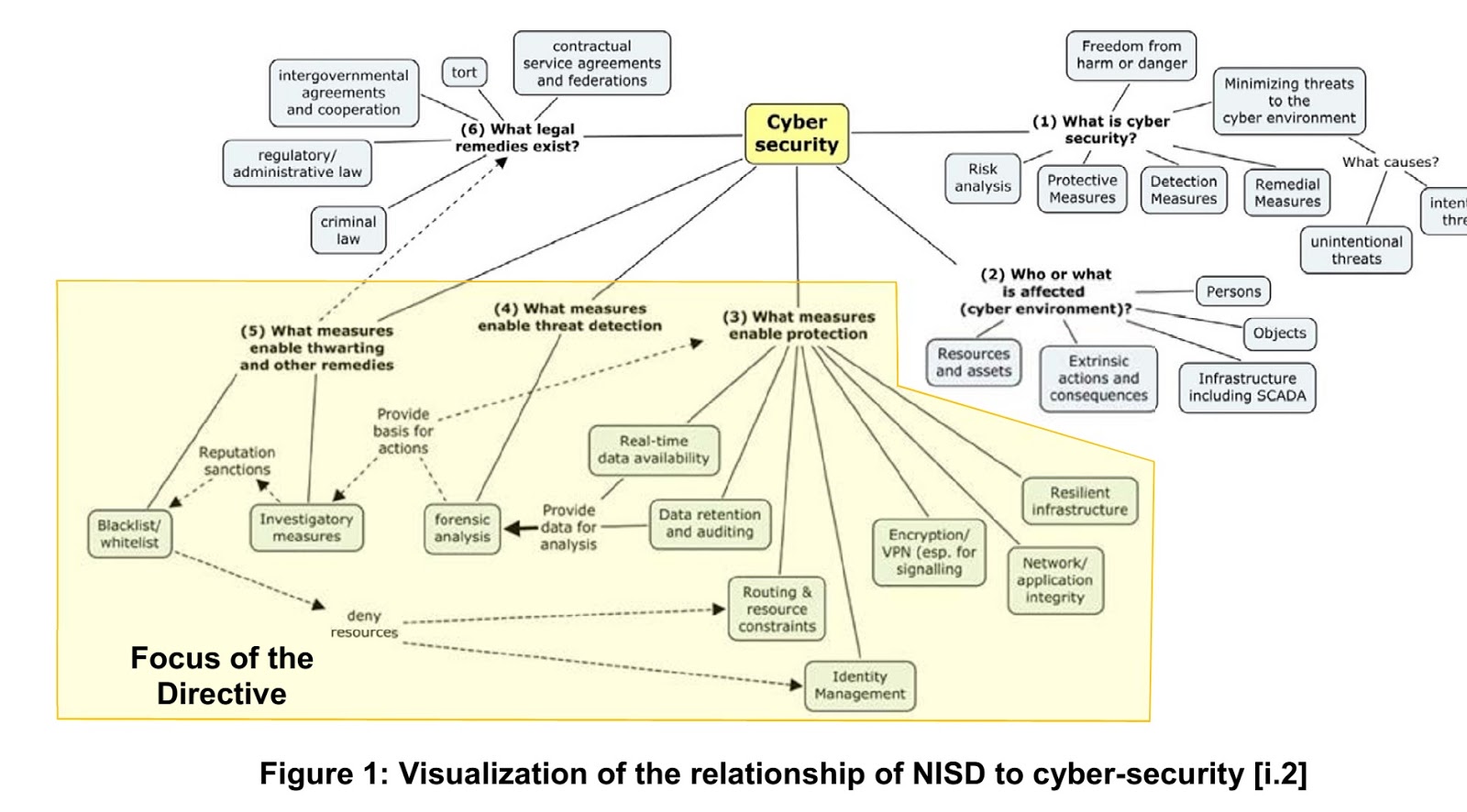
New Cyber Report recognises legal actions
June 2015 I sketched foreseen legal actions impacting on cybercrime. I posted a diagram-infographic in Feb 2016 "LEGALLY SPEAKING – OBSERVATIONS CHART FOR JUDGES BARRISTERS AND SOLICIT0RS" - http://trewmte.blogspot.co.uk/2016/02/threatware-legally-speaking.html.
I am pleased to see that ETSI (European Telecommunications Standards Institute) have also picked up on my themes in their 2017 published technical report (TR) CYBER; Implementation of the Network and Information Security (NIS) Directive ETSI TR 103 456 V1.1.1 (2017-10) with reference to Contract, Tort and Crime.

I am pleased to see that ETSI (European Telecommunications Standards Institute) have also picked up on my themes in their 2017 published technical report (TR) CYBER; Implementation of the Network and Information Security (NIS) Directive ETSI TR 103 456 V1.1.1 (2017-10) with reference to Contract, Tort and Crime.
Sunday, October 08, 2017


Subscribe to:
Posts (Atom)