Showing posts with label barristers. Show all posts

Sunday, October 29, 2017

New Cyber Report recognises legal actions

June 2015 I sketched foreseen legal actions impacting on cybercrime. I posted a diagram-infographic in Feb 2016 "LEGALLY SPEAKING – OBSERVATIONS CHART FOR JUDGES BARRISTERS AND SOLICIT0RS" - http://trewmte.blogspot.co.uk/2016/02/threatware-legally-speaking.html.

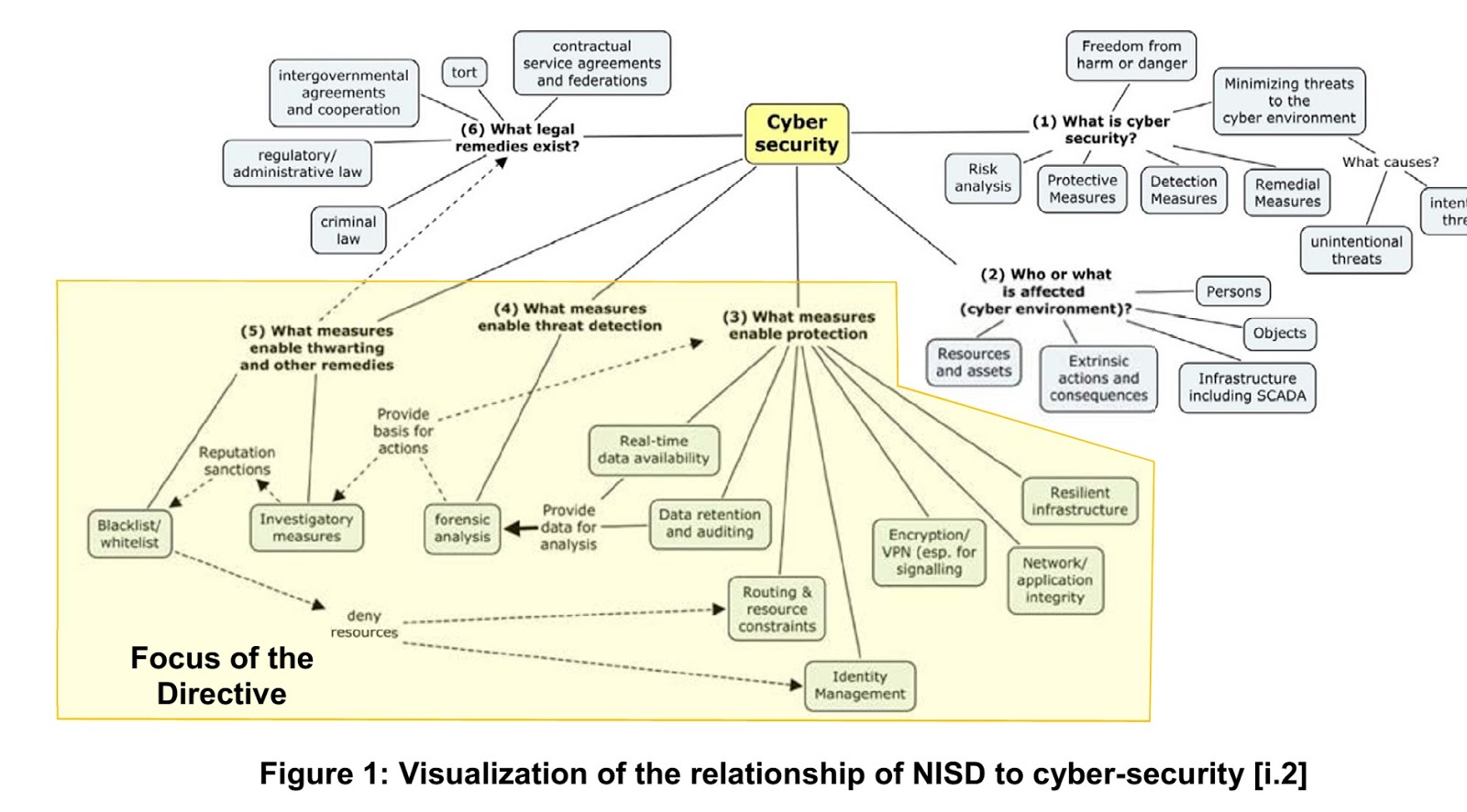
I am pleased to see that ETSI (European Telecommunications Standards Institute) have also picked up on my themes in their 2017 published technical report (TR) CYBER; Implementation of the Network and Information Security (NIS) Directive ETSI TR 103 456 V1.1.1 (2017-10) with reference to Contract, Tort and Crime.


Sunday, February 07, 2016

Threatware - legally speaking


LEGALLY SPEAKING – OBSERVATIONS CHART FOR JUDGES BARRISTERS AND SOLICIT0RS
The courts maybe faced with dealing with a wide range of mobile and computer criminal cases and civil disputes. These may include exploitation of the latter devices. Given the explosion of discontent in the world the use of "threatware" (a vernacular term adopted for this discussion) requires identification as to the type of threat defined by the outcome.
SKILLED OPINION
The supposed threat may not be enough by simply labelling it a threat - a victim's experience may not amount to a skilled opinion: The evidence was held not to be admissible on the grounds inter alia that no expert had given evidence as to the records, and that any connection they displayed between the cars stolen and those connected with the accused was a question of fact, not as in Abadom a question of opinion - Myers .v. D.P.P. [1965] A.C. 1001.
LABELLING THREATWARE
Calling a program "threatware" may require more than a simple label being attached to it; proof that it is what it is claimed to be a court may require substantiation: Patel v Controller of  Customs [1966] AC356 held the words “produce of  Morocco” stamped upon bags of coriander were inadmissible to prove the country of origin of the coriander.  The words were stamped on the bag with express intention of asserting a fact and were thus hearsay.
STORAGE MEDIA
A person having threatware may amount to possession but not intention to use. Equally, the definition of storage container vis-à-vis stored computer may also be subject to definition of 'computer' in e.g. civil law: Section 5 ss6 Civil Evidence Act 1968 - (6) Subject to subsection (3) above, in this Part of this Act " computer " means any device for storing and processing information, and any reference to information being derived from other information is a reference to its being derived therefrom by calculation, comparison or any other process. Also see Civil Evidence Act 1972 and 1995 for hearsay and opinion.
CONTRACTUAL DISPUTE
Where threatware is involved in the form of ransomware that arises in contractual dispute between parties see - Ordanduu GmbH & Anor, R (On the Application Of) v Phonepayplus Ltd [2015] EWHC 50 (Admin) (16 January 2015)
DATA PROTECTION
For a case where ransomware and data protection are involved see - CASE STUDIES 2013 - Data Protection Commissioner - Ireland [2013] IEDPC 18 (2013)    
MALWARE AS THREATWARE
Cyber Warfare: A Review of Theories, Law, Policies, Actual Incidents – and the Dilemma of Anonymity | Reich | European Journal of Law and Technology:   

Speaking of the problem of attributing, General Alexander notes that it is very hard "telling one actor from another and divining actors' intentions":
Not every event that affects our networks rises to the level of a national security threat. It is important to remember that hacking, spreading malware and other malicious activities are crimes, defined domestically as well as internationally by the Convention on Cybercrime, and accordingly have legal consequences. Even if you spot an intrusion and you know it originated from an adversary, you usually cannot tell an intelligence operation from a military one. (*page 5)
As part of the overall strategic plan of the US Department of Defense, emphasis must be placed on deterrence. General Alexander notes:
Attacks by hackers and criminals can cause "nation-state sized" effects; indeed, the accidental "release" of malware might do the same, and the problem of attributing the attack to a particular actor similarly remains difficult to impossible. We have to study deterrence anew, from a variety of perspectives, and to gain clarity on our authorities. To take a thought from Sun Tzu, we must understand the cyber environment and, the capabilities of our adversaries, and our own abilities as well. This is not going to be easy, and it is not going to yield answers soon. If we know one thing from the Cold War, it is that stable deterrence can take years to achieve, and is the product of planning, analysis, and dialogue across the government, academe, and industry, and with other nations as well. Cyber deterrence will require progress in situational awareness, defense, and offensive capabilities that adversaries know we will use if we deem necessary. (*page 5)
The above is a small sample of what is available regarding title variations, possible definitions and legal classification that may have bearing when dealing with threatware. I am not a lawyer merely I am simply using legal references to help support points in this discussion and suggesting a possible direction to seek further clarifications, observations or advice.


Sunday, January 27, 2013

Judge for yourself

I noted the reference made by Talwant Singh, Member (Judicial), E-Committee of Supreme Court of India, to a quote made by Hunter S Thompson ( http://en.wikipedia.org/wiki/Hunter_S._Thompson ) recently:  “We cannot expect people to have respect for law and order until we teach respect to those we have entrusted to enforce those laws.” Quite refreshing to see a senior public figure conversing in a language and using references understood by ordinary man and woman in the street. A few members of the British Judiciary I can recall in my life time over the last 50 years who were spoken about that endeavoured to keep that common touch: Lord Denning, Lord Wilberforce, Lord Woolf, Lord Bingham. I did hear from a few barristers, they thought, that Lord Justice Judge had endeavoured to make a good fist of it in keeping the lines of communication open. There are no doubt many others that are not on my radar but might be on yours. Have a look at wikipedia and see if there are any there that you know?

http://en.wikipedia.org/wiki/Master_of_the_Rolls
http://en.wikipedia.org/wiki/Category:British_judges

A barrister with a common touch whose work I learned about at school and on television (when I was growing up) was Edward Marshall Hall ( http://en.wikipedia.org/wiki/Edward_Marshall_Hall ).  So worth having a read about his work, too.

I have digressed slighly, sorry, from what I originally set out to say. So turning back to that intended topic, but non-judicial thought this time, that is this is not the first time a man from India has endeavoured to communicate with people from all walks of life. You may think I would reference Mahatma Gandi ( http://en.wikipedia.org/wiki/Mahatma_Ghandi ) at this stage, and that would be an excellent reference choice to make, but, no, I have someone else in mind: Joseph Rudyard Kiplinghttp://en.wikipedia.org/wiki/Rudyard_Kipling ). Kipling wrote that great and wonderful poem 'IF'. A poem that might rightly take its place in learning materials for school children. This poem teaches a wide range of communications skills (used in the english language) and social skills and at the same time seeks to empower each person to be an individual, keep inner strength, and at the same time not lose personal identity and values. Importantly, it defines that anyone should be able to talk with anyone no matter who they are.

If

If you can keep your head when all about you
Are losing theirs and blaming it on you;
If you can trust yourself when all men doubt you,
But make allowance for their doubting too;
If you can wait and not be tired by waiting,
Or, being lied about, don't deal in lies,
Or, being hated, don't give way to hating,
And yet don't look too good, nor talk too wise;

If you can dream - and not make dreams your master;
If you can think - and not make thoughts your aim;
If you can meet with triumph and disaster
And treat those two imposters just the same;
If you can bear to hear the truth you've spoken
Twisted by knaves to make a trap for fools,
Or watch the things you gave your life to broken,
And stoop and build 'em up with wornout tools;

If you can make one heap of all your winnings
And risk it on one turn of pitch-and-toss,
And lose, and start again at your beginnings
And never breath a word about your loss;
If you can force your heart and nerve and sinew
To serve your turn long after they are gone,
And so hold on when there is nothing in you
Except the Will which says to them: "Hold on";

If you can talk with crowds and keep your virtue,
Or walk with kings - nor lose the common touch;
If neither foes nor loving friends can hurt you;
If all men count with you, but none too much;
If you can fill the unforgiving minute
With sixty seconds' worth of distance run -
Yours is the Earth and everything that's in it,
And - which is more - you'll be a Man my son!

Lastly, because maintaining a common touch is an important life skill, there is something else about the poem 'If' which has an interesting reference. According to the Kipling Society, Rudyard Kipling knew Cecil Rhodes, Lord Milner and Dr Jameson ( http://www.kipling.org.uk/kip_fra.htm ) and it is the qualities of these men that inspired the peom 'IF'. Why might this be of interest? Messrs Milner and co were sent on an errand to South Africa as the British Government had received word that some British land and mine owners had allowed their avarice and greedy to get so out of control they had decended into total loss of control of their positions, property and money. When Lord Milner and entourage arrived at site the owners were living in the servants' sheds in drunkenness, filth and depravity, whilst the servants were living in the owners' mansions, wearing the owners clothes and spending their money. Milner looked to immediately establish a refreshment on education for these land and mine owners and took skills taught at Toynbee Hall in the EastEnd of London. Toynbee Hall it is known is renowned for it educational principles and later adopted by Hull House in Chicago. Hull House, as you may know, formed the first edcuational programme that later became the foundation for the Open University. Milner's work resulted in the education programme in South Africa being called the 'Kindergarten', which taught that even rulers need humility if they are to communicate with people they expect will serve them. It does make me wonder whether Milner, Rhodes and Jameson had sought observations from Kipling learned from his life skills and whether the poem 'IF' contains elements from conversations which Rudyard Kipling had with these men due to their friendship?
Thursday, October 30, 2008

Nice to recommend Lee Bowdler Richard Body & Co

Nice to recommend Lee Bowdler Richard Body & Co
A little while back I wrote about a Barrister and Barristers' Chambers to highlight that it is still an important commodity to recognize and thank people for the work they have done (http://trewmte.blogspot.com/2008/04/barristers-surrey-chambers.html). It is a commodity that, at times, seems to be in very short supply in this day and age, but a commodity I am not intending to give up.

One of the pleasures with having a blogspot is to be able to write nice things about nice people. I have just finished a case down in Hastings Sussex and I had the absolute privilege of working with a really excellent professional Mr Lee Bowdler of Richard Body and Co Solicitors. Throughout my expert engagement with this firm I could not have been treated better and the support I received from Lee was first class.

When I needed evidence relating to cell site analysis, as long as I could demonstrate to him why I needed it and its relevance to his client's case, Lee went and got it. Even when this meant taking people to task who were wasting his time; Lee always supported his expert. By way of illustration, specific details we asked about particular radio coverage and the technical arrangements at particular Masts, which I know some have said on the defence and prosecution wasn't obtainable, was in fact available and obtainable - you just have to ask the right questions, pay for it and have the legal privilege to obtain it.

To me this was a first class performance from Lee Bowdler and the solicitors practice of Richard Body and Co. As this solicitors practice works in criminal law and employment law in the Sussex, Surrey and London area, should anyone need legal assistance I would certainly recommend contacting Lee at this firm.

Lee Bowdler
Richard Body & Co
66 Bohemia Road
St Leonards
East Sussex TN37 6RQ
Tel: 01424 201301
Email: crimedept@richardbodyandco.com

Tuesday, April 08, 2008

Barristers - Surrey Chambers

Barristers - Surrey Chambers

One of the most overlooked parts of the law when dealing with crimnal and civil cases is that an expert, professional and client comes into contact with Barristers and Barristers' Chambers. That is quite shocking really as we meet with Barristers virtually on a daily basis for mobile telephone, computer, software and technology evidence in criminal cases and other commerical and civil matters.


Most professional people or companies one way or another require legal advice about professional matters for business and there are others who need assistance when initiating or facing civil or criminal proceedings. I have found a very good Set run by Mr James Tucker, Surrey Chambers of 1A Middle Temple Lane and Global House, Epsom http://www.surreychambers.org/. Not only does Surrey Chambers handle full range of commercial and civil matters but also prosecution, police and defence work. Really excellent Set.