
Showing posts with label data. Show all posts
Showing posts with label data. Show all posts
Friday, January 01, 2021

Wednesday, May 24, 2017
Survey: Digital Forensics Tool Testing
Following on from the post "Study into Carving Validation" - http://trewmte.blogspot.co.uk/2017/05/study-into-carving-validation.html ,Dr Graeme Horsman from the Faculty of Computer Science University of Sunderland has produced a questionnaire designed to acquire industry consensus on the wider vista associated with tool testing in the field of Digital Forensics. Responses are anonymous and the results will form part of research into the design and implementation of tool testing in the field, and will also be used as part of the production, publication and dissemination of research in this area.
As the survey responses are anonymous Dr. Horsman requests any questions or comments you have should be posted at the LinkedIn Group "Institute for Digital Forensics" - https://www.linkedin.com/groups/2436720 as all questions and comments made are under Chatham House Rules ( https://www.chathamhouse.org/about/chatham-house-rule )
This survey contains 15 questions. Estimated time to complete - 4 minutes.
https://sunduni.eu.qualtrics.com/jfe/form/SV_5uupcHQ8cMYiiO1
As the survey responses are anonymous Dr. Horsman requests any questions or comments you have should be posted at the LinkedIn Group "Institute for Digital Forensics" - https://www.linkedin.com/groups/2436720 as all questions and comments made are under Chatham House Rules ( https://www.chathamhouse.org/about/chatham-house-rule )
This survey contains 15 questions. Estimated time to complete - 4 minutes.
https://sunduni.eu.qualtrics.com/jfe/form/SV_5uupcHQ8cMYiiO1
Thursday, May 18, 2017
Study into Carving Validation
At the LinkedIn Group "Institute for Digital Forensics" ( https://www.linkedin.com/groups/2436720 ) we are pleased to announce Dr Graeme Horsman PhD, BSc (Hons), MJur (Dur), PGCertHE, SFHEA from the Faculty of Computer Science University of Sunderland has joined the Group and wants to seek assistance from practitioners, in-house test and examination departments and laboratories regarding thoughts on testing in terms of the tools that are used. This is in terms of strategies etc., given the importance (albeit it has always been important) with ISO standards etc. Do IDF members have their own "test data and strategy that they roll out on new software/releases"? This is in relation to potential value of an automated test data generator for known good content from which to evaluate parsing/carving algorithms. This would be with respect to "carving validation" so test data would be geared towards such algorithms. Dr Horsman would appreciate as much feedback as possible and wants to engage in discussions to facilitate this study.
Access to content and discussions is open to LinkedIn members who request and are approved for membership to the Group "Institute for Digital Forensics.
Access to content and discussions is open to LinkedIn members who request and are approved for membership to the Group "Institute for Digital Forensics.
Monday, February 01, 2016
Investigation USIM EFs and Service Table
There has been so much going on over the past year and with research and testing I haven't posted as much as I would like. The growth areas in the variety of methods and tools for logical data and physical data extraction, harvesting and examination; impact that apps and malware might have on evidence; wireless options available on smartphones and tablets changing the way traditional cell site analysis can be conducted; and the generally the explosion in mobile information and standards needing to be absorbed and understood has been mind-blowing to say the least. These and other matters have consumed my time and the casualty has been fewer posts at the blog. However, from all the work and research I will endeavour to post here, hopefully, useful examination and investigative information on areas that may have either become outdated or evolved such that particular methods applied or tools used could be out-of-date or updated.
USIM (UICC) Cards memory storage and network/user files have seen a massive increase since 2010. Just have a look back at a post in 2010 I made here at trewmte.blogspot and compare the EFUST (elementary files usim service table) in TS 31.102 back then 3g-usim-2g-sim-service-numbers.html compared to the latest releases 12 ( 31_series/31.102/31102-ca0.zip ) and 13 ( 31.102/31102-d20.zip )
The first thing an examiner might wish do first thing in the morning at work is check whether the USIM reader tool is up-to-date. Have a look at the EFUST list and list of elementary files below and check that your reader has the capability to detect, extract and harvest data from these files. Then ask yourself do you actually understand when they are allocated and activated in a USIM what use is made of them? What evidence maybe harvested from them? How would the acquired data assist investigations in the following categories as they would apply to the use of mobile communications?
EFUST
Service n°1: Local Phone Book
Service n°2: Fixed Dialling Numbers (FDN)
Service n°3: Extension 2
Service n°4: Service Dialling Numbers (SDN)
Service n°5: Extension3
Service n°6: Barred Dialling Numbers (BDN)
Service n°7: Extension4
Service n°8: Outgoing Call Information (OCI and OCT)
Service n°9: Incoming Call Information (ICI and ICT)
Service n°10: Short Message Storage (SMS)
Service n°11: Short Message Status Reports (SMSR)
Service n°12: Short Message Service Parameters (SMSP)
Service n°13: Advice of Charge (AoC)
Service n°14: Capability Configuration Parameters 2 (CCP2)
Service n°15: Cell Broadcast Message Identifier
Service n°16: Cell Broadcast Message Identifier Ranges
Service n°17: Group Identifier Level 1
Service n°18: Group Identifier Level 2
Service n°19: Service Provider Name
Service n°20: User controlled PLMN selector with Access Technology
Service n°21: MSISDN
Service n°22: Image (IMG)
Service n°23: Support of Localised Service Areas (SoLSA)
Service n°24: Enhanced Multi Level Precedence and Pre emption Service
Service n°25: Automatic Answer for eMLPP
Service n°26: RFU
Service n°27: GSM Access
Service n°28: Data download via SMS-PP
Service n°29: Data download via SMS CB
Service n°30: Call Control by USIM
Service n°31: MO-SMS Control by USIM
Service n°32: RUN AT COMMAND command
Service n°33: shall be set to '1'
Service n°34: Enabled Services Table
Service n°35: APN Control List (ACL)
Service n°36: Depersonalisation Control Keys
Service n°37: Co-operative Network List
Service n°38: GSM security context
Service n°39: CPBCCH Information
Service n°40: Investigation Scan
Service n°41: MexE
Service n°42: Operator controlled PLMN selector with Access Technology
Service n°43: HPLMN selector with Access Technology
Service n°44: Extension 5
Service n°45: PLMN Network Name
Service n°46: Operator PLMN List
Service n°47: Mailbox Dialling Numbers
Service n°48: Message Waiting Indication Status
Service n°49: Call Forwarding Indication Status
Service n°50: Reserved and shall be ignored
Service n°51: Service Provider Display Information
Service n°52 Multimedia Messaging Service (MMS)
Service n°53 Extension 8
Service n°54 Call control on GPRS by USIM
Service n°55 MMS User Connectivity Parameters
Service n°56 Network's indication of alerting in the MS (NIA)
Service n°57 VGCS Group Identifier List (EFVGCS and EFVGCSS)
Service n°58 VBS Group Identifier List (EFVBS and EFVBSS)
Service n°59 Pseudonym
Service n°60 User Controlled PLMN selector for I-WLAN access
Service n°61 Operator Controlled PLMN selector for I-WLAN access
Service n°62 User controlled WSID list
Service n°63 Operator controlled WSID list
Service n°64 VGCS security
Service n°65 VBS security
Service n°66 WLAN Reauthentication Identity
Service n°67 Multimedia Messages Storage
Service n°68 Generic Bootstrapping Architecture (GBA)
Service n°69 MBMS security
Service n°70 Data download via USSD and USSD application mode
Service n°71 Equivalent HPLMN
Service n°72 Additional TERMINAL PROFILE after UICC activation
Service n°73 Equivalent HPLMN Presentation Indication
Service n°74 Last RPLMN Selection Indication
Service n°75 OMA BCAST Smart Card Profile
Service n°76 GBA-based Local Key Establishment Mechanism
Service n°77 Terminal Applications
Service n°78 Service Provider Name Icon
Service n°79 PLMN Network Name Icon
Service n°80 Connectivity Parameters for USIM IP connections
Service n°81 Home I-WLAN Specific Identifier List
Service n°82 I-WLAN Equivalent HPLMN Presentation Indication
Service n°83 I-WLAN HPLMN Priority Indication
Service n°84 I-WLAN Last Registered PLMN
Service n°85 EPS Mobility Management Information
Service n°86 Allowed CSG Lists and corresponding indications
Service n°87 Call control on EPS PDN connection by USIM
Service n°88 HPLMN Direct Access
Service n°89 eCall Data
Service n°90 Operator CSG Lists and corresponding indications
Service n°91 Support for SM-over-IP
Service n°92 Support of CSG Display Control
Service n°93 Communication Control for IMS by USIM
Service n°94 Extended Terminal Applications
Service n°95 Support of UICC access to IMS
Service n°96 Non-Access Stratum configuration by USIM
Service n°97 PWS configuration by USIM
Service n°98 RFU
Service n°99 URI support by UICC
Service n°100 Extended EARFCN support
Service n°101 ProSe
Service n°102 USAT Application Pairing
Particular note: when looking at the EFUST service list above this should not be taken as all the services that may be allocated and activated on modules in a UICC. GSM EFSST (sim service table) has particular services unique to GSM SIM (GSM 11.11), such as Service n°29: Proactive SIM which does not appear in the EFUST list. And if Service n°29: Proactive SIM is important to an investigation (and it can be) it is worth the reminder to look at GSM 11.14 (sim application toolkit) that adds services and most importantly "capabilities" between SIM and smartphone. Perhaps you might think, such as, how this can assist an investigation? My responses is consider (a) man-in-the-middle attacks (b) crime (c) cybercrime.
There has been an abundance in the growth of elementary files, too, in USIM Releases 12/13. The increase in access to varying networks by smartphones and tablets has meant the technical, privacy, commercial and monetisation influences how a subscriber latches and attaches to networks. The relevance being recovered message data for instance requires understanding and identifying how the data got there via which particular network access point etc.
3GPP TS 31.102 V12.10.0 (2016-01)
4 Contents of the Files 18
4.1 Contents of the EFs at the MF level 18
4.2 Contents of files at the USIM ADF (Application DF) level 18
4.2.1 EFLI (Language Indication) 18
4.2.2 EFIMSI (IMSI) 19
4.2.3 EFKeys (Ciphering and Integrity Keys) 20
4.2.4 EFKeysPS (Ciphering and Integrity Keys for Packet Switched domain) 21
4.2.5 EFPLMNwAcT (User controlled PLMN selector with Access Technology) 21
4.2.6 EFHPPLMN (Higher Priority PLMN search period) 22
4.2.7 EFACMmax (ACM maximum value) 23
4.2.8 EFUST (USIM Service Table) 25
4.2.9 EFACM (Accumulated Call Meter) 27
4.2.10 EFGID1 (Group Identifier Level 1) 28
4.2.11 EFGID2 (Group Identifier Level 2) 28
4.2.12 EFSPN (Service Provider Name) 28
4.2.13 EFPUCT (Price per Unit and Currency Table) 29
4.2.14 EFCBMI (Cell Broadcast Message identifier selection) 30
4.2.15 EFACC (Access Control Class) 31
4.2.16 EFFPLMN (Forbidden PLMNs) 31
4.2.17 EFLOCI (Location Information) 32
4.2.18 EFAD (Administrative Data) 33
4.2.19 Void 35
4.2.20 EFCBMID (Cell Broadcast Message Identifier for Data Download) 35
4.2.21 EFECC (Emergency Call Codes) 36
4.2.22 EFCBMIR (Cell Broadcast Message Identifier Range selection) 37
4.2.23 EFPSLOCI (Packet Switched location information) 37
4.2.24 EFFDN (Fixed Dialling Numbers) 39
4.2.25 EFSMS (Short messages) 39
4.2.26 EFMSISDN (MSISDN) 41
4.2.27 EFSMSP (Short message service parameters) 41
4.2.28 EFSMSS (SMS status) 43
4.2.29 EFSDN (Service Dialling Numbers) 43
4.2.30 EFEXT2 (Extension2) 44
4.2.31 EFEXT3 (Extension3) 44
4.2.32 EFSMSR (Short message status reports) 45
4.2.33 EFICI (Incoming Call Information) 45
4.2.34 EFOCI (Outgoing Call Information) 49
4.2.35 EFICT (Incoming Call Timer) 50
4.2.36 EFOCT (Outgoing Call Timer) 50
4.2.37 EFEXT5 (Extension5) 51
4.2.38 EFCCP2 (Capability Configuration Parameters 2) 51
4.2.39 EFeMLPP (enhanced Multi Level Precedence and Pre-emption) 52
4.2.40 EFAaeM (Automatic Answer for eMLPP Service) 53
4.2.41 Void 54
4.2.42 EFHiddenkey (Key for hidden phone book entries) 54
4.2.43 Void 54
4.2.44 EFBDN (Barred Dialling Numbers) 54
4.2.45 EFEXT4 (Extension4) 55
4.2.46 EFCMI (Comparison Method Information) 55
4.2.47 EFEST (Enabled Services Table) 56
4.2.48 EFACL (Access Point Name Control List) 56
4.2.49 EFDCK (Depersonalisation Control Keys) 57
4.2.50 EFCNL (Co-operative Network List) 57
4.2.51 EFSTART-HFN (Initialisation values for Hyperframe number) 59
4.2.52 EFTHRESHOLD (Maximum value of START) 59
4.2.53 EFOPLMNwACT (Operator controlled PLMN selector with Access Technology) 59
4.2.54 EFHPLMNwAcT (HPLMN selector with Access Technology) 60
4.2.55 EFARR (Access Rule Reference) 61
4.2.56 Void 62
4.2.57 EFNETPAR (Network Parameters) 62
4.2.58 EFPNN (PLMN Network Name) 64
4.2.59 EFOPL (Operator PLMN List) 65
4.2.60 EFMBDN (Mailbox Dialling Numbers) 66
4.2.61 EFEXT6 (Extension6) 67
4.2.62 EFMBI (Mailbox Identifier) 67
4.2.63 EFMWIS (Message Waiting Indication Status) 67
4.2.64 EFCFIS (Call Forwarding Indication Status) 69
4.2.65 EFEXT7 (Extension7) 70
4.2.66 EFSPDI (Service Provider Display Information) 70
4.2.67 EFMMSN (MMS Notification) 71
4.2.68 EFEXT8 (Extension 8) 73
4.2.69 EFMMSICP (MMS Issuer Connectivity Parameters) 73
4.2.70 EFMMSUP (MMS User Preferences) 76
4.2.71 EFMMSUCP (MMS User Connectivity Parameters) 77
4.2.72 EFNIA (Network's Indication of Alerting) 77
4.2.73 EFVGCS (Voice Group Call Service) 78
4.2.74 EFVGCSS (Voice Group Call Service Status) 80
4.2.75 EFVBS (Voice Broadcast Service) 80
4.2.76 EFVBSS (Voice Broadcast Service Status) 82
4.2.77 EFVGCSCA (Voice Group Call Service Ciphering Algorithm) 83
4.2.78 EFVBSCA (Voice Broadcast Service Ciphering Algorithm) 84
4.2.79 EFGBABP (GBA Bootstrapping parameters) 84
4.2.80 EFMSK (MBMS Service Keys List) 85
4.2.81 EFMUK (MBMS User Key) 86
4.2.82 Void 87
4.2.83 EFGBANL (GBA NAF List) 87
4.2.84 EFEHPLMN (Equivalent HPLMN) 88
4.2.85 EFEHPLMNPI (Equivalent HPLMN Presentation Indication) 88
4.2.86 EFLRPLMNSI (Last RPLMN Selection Indication) 89
4.2.87 EFNAFKCA (NAF Key Centre Address) 89
4.2.88 EFSPNI (Service Provider Name Icon) 90
4.2.89 EFPNNI (PLMN Network Name Icon) 91
4.2.90 EFNCP-IP (Network Connectivity Parameters for USIM IP connections) 91
4.2.91 EFEPSLOCI (EPS location information) 94
4.2.92 EFEPSNSC (EPS NAS Security Context) 96
4.2.93 EFUFC (USAT Facility Control) 97
4.2.94 EFNASCONFIG (Non Access Stratum Configuration) 98
4.2.95 EFUICCIARI (UICC IARI) 102
4.2.96 EFPWS (Public Warning System) 102
4.2.97 EFFDNURI (Fixed Dialling Numbers URI) 103
4.2.98 EFBDNURI (Barred Dialling Numbers URI) 104
4.2.99 EFSDNURI (Service Dialling Numbers URI) 104
4.2.100 EFIWL (IMEI(SV) White Lists) 105
4.2.101 EFIPS (IMEI(SV) Pairing Status) 106
4.2.102 EFIPD (IMEI(SV) of Pairing Device) 107
4.3 DFs at the USIM ADF (Application DF) Level 108
4.4 Contents of DFs at the USIM ADF (Application DF) level 108
4.4.1 Contents of files at the DF SoLSA level 108
4.4.1.1 EFSAI (SoLSA Access Indicator) 109
4.4.1.2 EFSLL (SoLSA LSA List) 109
4.4.1.3 LSA Descriptor files 112
4.4.2 Contents of files at the DF PHONEBOOK level 113
4.4.2.1 EFPBR (Phone Book Reference file) 113
4.4.2.2 EFIAP (Index Administration Phone book) 115
4.4.2.3 EFADN (Abbreviated dialling numbers) 116
4.4.2.4 EFEXT1 (Extension1) 119
4.4.2.5 EFPBC (Phone Book Control) 120
4.4.2.6 EFGRP (Grouping file) 121
4.4.2.7 EFAAS (Additional number Alpha String) 122
4.4.2.8 EFGAS (Grouping information Alpha String) 123
4.4.2.9 EFANR (Additional Number) 123
4.4.2.10 EFSNE (Second Name Entry) 125
4.4.2.11 EFCCP1 (Capability Configuration Parameters 1) 125
4.4.2.12 Phone Book Synchronisation 126
4.4.2.12.1 EFUID (Unique Identifier) 126
4.4.2.12.2 EFPSC (Phone book Synchronisation Counter) 127
4.4.2.12.3 EFCC (Change Counter) 128
4.4.2.12.4 EFPUID (Previous Unique Identifier) 128
4.4.2.13 EFEMAIL (e-mail address) 129
4.4.2.14 Phonebook restrictions 130
4.4.2.15 EFPURI (Phonebook URIs) 130
4.4.3 Contents of files at the DF GSM-ACCESS level (Files required for GSM Access) 131
4.4.3.1 EFKc (GSM Ciphering key Kc) 131
4.4.3.2 EFKcGPRS (GPRS Ciphering key KcGPRS) 132
4.4.3.3 Void 132
4.4.3.4 EFCPBCCH (CPBCCH Information) 132
4.4.3.5 EFInvScan (Investigation Scan) 133
4.4.4 Contents of files at the MexE level 134
4.4.4.1 EFMexE-ST (MexE Service table) 134
4.4.4.2 EFORPK (Operator Root Public Key) 134
4.4.4.3 EFARPK (Administrator Root Public Key) 136
4.4.4.4 EFTPRPK (Third Party Root Public Key) 137
4.4.4.5 EFTKCDF (Trusted Key/Certificates Data Files) 138
4.4.5 Contents of files at the DF WLAN level 138
4.4.5.1 EFPseudo (Pseudonym) 138
4.4.5.2 EFUPLMNWLAN (User controlled PLMN selector for I-WLAN Access) 139
4.4.5.3 EFOPLMNWLAN (Operator controlled PLMN selector for I-WLAN Access) 139
4.4.5.4 EFUWSIDL (User controlled WLAN Specific Identifier List) 140
4.4.5.5 EFOWSIDL (Operator controlled WLAN Specific IdentifierList) 141
4.4.5.6 EFWRI (WLAN Reauthentication Identity) 141
4.4.5.7 EFHWSIDL (Home I-WLAN Specific Identifier List) 142
4.4.5.8 EFWEHPLMNPI (I-WLAN Equivalent HPLMN Presentation Indication) 143
4.4.5.9 EFWHPI (I-WLAN HPLMN Priority Indication) 143
4.4.5.10 EFWLRPLMN (I-WLAN Last Registered PLMN) 144
4.4.5.11 EFHPLMNDAI (HPLMN Direct Access Indicator) 144
4.4.6 Contents of files at the DF HNB level 145
4.4.6.1 Introduction 145
4.4.6.2 EFACSGL (Allowed CSG Lists) 145
4.4.6.3 EFCSGT (CSG Type) 148
4.4.6.4 EFHNBN (Home NodeB Name) 150
4.4.6.5 EFOCSGL (Operator CSG Lists) 150
4.4.6.6 EFOCSGT (Operator CSG Type) 152
4.4.6.7 EFOHNBN (Operator Home NodeB Name) 153
4.4.7 Void 153
4.4.8 Contents of files at the DF ProSe level 153
4.4.8.1 Introduction 153
4.4.8.2 EFPROSE_MON (ProSe Monitoring Parameters) 153
4.4.8.3 EFPROSE_ANN (ProSe Announcing Parameters) 154
4.4.8.4 EFPROSEFUNC (HPLMN ProSe Function) 155
4.4.8.5 EFPROSE_RADIO_COM (ProSe Direct Communication Radio Parameters) 156
4.4.8.6 EFPROSE_RADIO_MON (ProSe Direct Discovery Monitoring Radio Parameters) 157
4.4.8.7 EFPROSE_RADIO_ANN (ProSe Direct Discovery Announcing Radio Parameters) 158
4.4.8.8 EFPROSE_POLICY (ProSe Policy Parameters) 158
4.4.8.9 EFPROSE_PLMN (ProSe PLMN Parameters) 160
4.4.8.10 EFPROSE_GC (ProSe Group Counter) 161
4.4.8.11 EFPST (ProSe Service Table) 162
4.4.8.12 EFPROSE_UIRC (ProSe UsageInformationReportingConfiguration) 162
4.5 Contents of Efs at the TELECOM level 166
4.5.1 EFADN (Abbreviated dialling numbers) 166
4.5.2 EFEXT1 (Extension1) 166
4.5.3 EFECCP (Extended Capability Configuration Parameter) 166
4.5.4 EFSUME (SetUpMenu Elements) 166
4.5.5 EFARR (Access Rule Reference) 166
4.5.6 EFICE_DN (In Case of Emergency – Dialling Number) 167
4.5.7 EFICE_FF (In Case of Emergency – Free Format) 167
4.5.8 EFRMA (Remote Management Actions) 168
4.5.9 EFPSISMSC (Public Service Identity of the SM-SC) 168
4.6 Contents of DFs at the TELECOM level 168
4.6.1 Contents of files at the DFGRAPHICS level 169
4.6.1.1 EFIMG (Image) 169
4.6.1.2 EFIIDF (Image Instance Data Files) 170
4.6.1.3 EFICE graphics (In Case of Emergency – Graphics) 171
4.6.1.4 EFLAUNCH SCWS 171
4.6.1.5 EFICON 175
4.6.2 Contents of files at the DFPHONEBOOK under the DFTELECOM 176
4.6.3 Contents of files at the DFMULTIMEDIA level 176
4.6.3.1 EFMML (Multimedia Messages List) 176
4.6.3.2 EFMMDF (Multimedia Messages Data File) 179
4.7 Files of USIM 180
I will leave you to conclude whether you may think USIM has little or no relevance to an investigation.
USIM (UICC) Cards memory storage and network/user files have seen a massive increase since 2010. Just have a look back at a post in 2010 I made here at trewmte.blogspot and compare the EFUST (elementary files usim service table) in TS 31.102 back then 3g-usim-2g-sim-service-numbers.html compared to the latest releases 12 ( 31_series/31.102/31102-ca0.zip ) and 13 ( 31.102/31102-d20.zip )
The first thing an examiner might wish do first thing in the morning at work is check whether the USIM reader tool is up-to-date. Have a look at the EFUST list and list of elementary files below and check that your reader has the capability to detect, extract and harvest data from these files. Then ask yourself do you actually understand when they are allocated and activated in a USIM what use is made of them? What evidence maybe harvested from them? How would the acquired data assist investigations in the following categories as they would apply to the use of mobile communications?
i)
Contract Law
ii)
Tort Law
iii)
Intellectual Property Law
iv)
Criminal (including the new Cybercrime) Law
v)
Data Protection Law
vi)
Taxation Law
vii)
Computer Law
viii)
Communications Law
ix)
Internet Law
x)
Etc.
EFUST
Service n°1: Local Phone Book
Service n°2: Fixed Dialling Numbers (FDN)
Service n°3: Extension 2
Service n°4: Service Dialling Numbers (SDN)
Service n°5: Extension3
Service n°6: Barred Dialling Numbers (BDN)
Service n°7: Extension4
Service n°8: Outgoing Call Information (OCI and OCT)
Service n°9: Incoming Call Information (ICI and ICT)
Service n°10: Short Message Storage (SMS)
Service n°11: Short Message Status Reports (SMSR)
Service n°12: Short Message Service Parameters (SMSP)
Service n°13: Advice of Charge (AoC)
Service n°14: Capability Configuration Parameters 2 (CCP2)
Service n°15: Cell Broadcast Message Identifier
Service n°16: Cell Broadcast Message Identifier Ranges
Service n°17: Group Identifier Level 1
Service n°18: Group Identifier Level 2
Service n°19: Service Provider Name
Service n°20: User controlled PLMN selector with Access Technology
Service n°21: MSISDN
Service n°22: Image (IMG)
Service n°23: Support of Localised Service Areas (SoLSA)
Service n°24: Enhanced Multi Level Precedence and Pre emption Service
Service n°25: Automatic Answer for eMLPP
Service n°26: RFU
Service n°27: GSM Access
Service n°28: Data download via SMS-PP
Service n°29: Data download via SMS CB
Service n°30: Call Control by USIM
Service n°31: MO-SMS Control by USIM
Service n°32: RUN AT COMMAND command
Service n°33: shall be set to '1'
Service n°34: Enabled Services Table
Service n°35: APN Control List (ACL)
Service n°36: Depersonalisation Control Keys
Service n°37: Co-operative Network List
Service n°38: GSM security context
Service n°39: CPBCCH Information
Service n°40: Investigation Scan
Service n°41: MexE
Service n°42: Operator controlled PLMN selector with Access Technology
Service n°43: HPLMN selector with Access Technology
Service n°44: Extension 5
Service n°45: PLMN Network Name
Service n°46: Operator PLMN List
Service n°47: Mailbox Dialling Numbers
Service n°48: Message Waiting Indication Status
Service n°49: Call Forwarding Indication Status
Service n°50: Reserved and shall be ignored
Service n°51: Service Provider Display Information
Service n°52 Multimedia Messaging Service (MMS)
Service n°53 Extension 8
Service n°54 Call control on GPRS by USIM
Service n°55 MMS User Connectivity Parameters
Service n°56 Network's indication of alerting in the MS (NIA)
Service n°57 VGCS Group Identifier List (EFVGCS and EFVGCSS)
Service n°58 VBS Group Identifier List (EFVBS and EFVBSS)
Service n°59 Pseudonym
Service n°60 User Controlled PLMN selector for I-WLAN access
Service n°61 Operator Controlled PLMN selector for I-WLAN access
Service n°62 User controlled WSID list
Service n°63 Operator controlled WSID list
Service n°64 VGCS security
Service n°65 VBS security
Service n°66 WLAN Reauthentication Identity
Service n°67 Multimedia Messages Storage
Service n°68 Generic Bootstrapping Architecture (GBA)
Service n°69 MBMS security
Service n°70 Data download via USSD and USSD application mode
Service n°71 Equivalent HPLMN
Service n°72 Additional TERMINAL PROFILE after UICC activation
Service n°73 Equivalent HPLMN Presentation Indication
Service n°74 Last RPLMN Selection Indication
Service n°75 OMA BCAST Smart Card Profile
Service n°76 GBA-based Local Key Establishment Mechanism
Service n°77 Terminal Applications
Service n°78 Service Provider Name Icon
Service n°79 PLMN Network Name Icon
Service n°80 Connectivity Parameters for USIM IP connections
Service n°81 Home I-WLAN Specific Identifier List
Service n°82 I-WLAN Equivalent HPLMN Presentation Indication
Service n°83 I-WLAN HPLMN Priority Indication
Service n°84 I-WLAN Last Registered PLMN
Service n°85 EPS Mobility Management Information
Service n°86 Allowed CSG Lists and corresponding indications
Service n°87 Call control on EPS PDN connection by USIM
Service n°88 HPLMN Direct Access
Service n°89 eCall Data
Service n°90 Operator CSG Lists and corresponding indications
Service n°91 Support for SM-over-IP
Service n°92 Support of CSG Display Control
Service n°93 Communication Control for IMS by USIM
Service n°94 Extended Terminal Applications
Service n°95 Support of UICC access to IMS
Service n°96 Non-Access Stratum configuration by USIM
Service n°97 PWS configuration by USIM
Service n°98 RFU
Service n°99 URI support by UICC
Service n°100 Extended EARFCN support
Service n°101 ProSe
Service n°102 USAT Application Pairing
Particular note: when looking at the EFUST service list above this should not be taken as all the services that may be allocated and activated on modules in a UICC. GSM EFSST (sim service table) has particular services unique to GSM SIM (GSM 11.11), such as Service n°29: Proactive SIM which does not appear in the EFUST list. And if Service n°29: Proactive SIM is important to an investigation (and it can be) it is worth the reminder to look at GSM 11.14 (sim application toolkit) that adds services and most importantly "capabilities" between SIM and smartphone. Perhaps you might think, such as, how this can assist an investigation? My responses is consider (a) man-in-the-middle attacks (b) crime (c) cybercrime.
There has been an abundance in the growth of elementary files, too, in USIM Releases 12/13. The increase in access to varying networks by smartphones and tablets has meant the technical, privacy, commercial and monetisation influences how a subscriber latches and attaches to networks. The relevance being recovered message data for instance requires understanding and identifying how the data got there via which particular network access point etc.
3GPP TS 31.102 V12.10.0 (2016-01)
4 Contents of the Files 18
4.1 Contents of the EFs at the MF level 18
4.2 Contents of files at the USIM ADF (Application DF) level 18
4.2.1 EFLI (Language Indication) 18
4.2.2 EFIMSI (IMSI) 19
4.2.3 EFKeys (Ciphering and Integrity Keys) 20
4.2.4 EFKeysPS (Ciphering and Integrity Keys for Packet Switched domain) 21
4.2.5 EFPLMNwAcT (User controlled PLMN selector with Access Technology) 21
4.2.6 EFHPPLMN (Higher Priority PLMN search period) 22
4.2.7 EFACMmax (ACM maximum value) 23
4.2.8 EFUST (USIM Service Table) 25
4.2.9 EFACM (Accumulated Call Meter) 27
4.2.10 EFGID1 (Group Identifier Level 1) 28
4.2.11 EFGID2 (Group Identifier Level 2) 28
4.2.12 EFSPN (Service Provider Name) 28
4.2.13 EFPUCT (Price per Unit and Currency Table) 29
4.2.14 EFCBMI (Cell Broadcast Message identifier selection) 30
4.2.15 EFACC (Access Control Class) 31
4.2.16 EFFPLMN (Forbidden PLMNs) 31
4.2.17 EFLOCI (Location Information) 32
4.2.18 EFAD (Administrative Data) 33
4.2.19 Void 35
4.2.20 EFCBMID (Cell Broadcast Message Identifier for Data Download) 35
4.2.21 EFECC (Emergency Call Codes) 36
4.2.22 EFCBMIR (Cell Broadcast Message Identifier Range selection) 37
4.2.23 EFPSLOCI (Packet Switched location information) 37
4.2.24 EFFDN (Fixed Dialling Numbers) 39
4.2.25 EFSMS (Short messages) 39
4.2.26 EFMSISDN (MSISDN) 41
4.2.27 EFSMSP (Short message service parameters) 41
4.2.28 EFSMSS (SMS status) 43
4.2.29 EFSDN (Service Dialling Numbers) 43
4.2.30 EFEXT2 (Extension2) 44
4.2.31 EFEXT3 (Extension3) 44
4.2.32 EFSMSR (Short message status reports) 45
4.2.33 EFICI (Incoming Call Information) 45
4.2.34 EFOCI (Outgoing Call Information) 49
4.2.35 EFICT (Incoming Call Timer) 50
4.2.36 EFOCT (Outgoing Call Timer) 50
4.2.37 EFEXT5 (Extension5) 51
4.2.38 EFCCP2 (Capability Configuration Parameters 2) 51
4.2.39 EFeMLPP (enhanced Multi Level Precedence and Pre-emption) 52
4.2.40 EFAaeM (Automatic Answer for eMLPP Service) 53
4.2.41 Void 54
4.2.42 EFHiddenkey (Key for hidden phone book entries) 54
4.2.43 Void 54
4.2.44 EFBDN (Barred Dialling Numbers) 54
4.2.45 EFEXT4 (Extension4) 55
4.2.46 EFCMI (Comparison Method Information) 55
4.2.47 EFEST (Enabled Services Table) 56
4.2.48 EFACL (Access Point Name Control List) 56
4.2.49 EFDCK (Depersonalisation Control Keys) 57
4.2.50 EFCNL (Co-operative Network List) 57
4.2.51 EFSTART-HFN (Initialisation values for Hyperframe number) 59
4.2.52 EFTHRESHOLD (Maximum value of START) 59
4.2.53 EFOPLMNwACT (Operator controlled PLMN selector with Access Technology) 59
4.2.54 EFHPLMNwAcT (HPLMN selector with Access Technology) 60
4.2.55 EFARR (Access Rule Reference) 61
4.2.56 Void 62
4.2.57 EFNETPAR (Network Parameters) 62
4.2.58 EFPNN (PLMN Network Name) 64
4.2.59 EFOPL (Operator PLMN List) 65
4.2.60 EFMBDN (Mailbox Dialling Numbers) 66
4.2.61 EFEXT6 (Extension6) 67
4.2.62 EFMBI (Mailbox Identifier) 67
4.2.63 EFMWIS (Message Waiting Indication Status) 67
4.2.64 EFCFIS (Call Forwarding Indication Status) 69
4.2.65 EFEXT7 (Extension7) 70
4.2.66 EFSPDI (Service Provider Display Information) 70
4.2.67 EFMMSN (MMS Notification) 71
4.2.68 EFEXT8 (Extension 8) 73
4.2.69 EFMMSICP (MMS Issuer Connectivity Parameters) 73
4.2.70 EFMMSUP (MMS User Preferences) 76
4.2.71 EFMMSUCP (MMS User Connectivity Parameters) 77
4.2.72 EFNIA (Network's Indication of Alerting) 77
4.2.73 EFVGCS (Voice Group Call Service) 78
4.2.74 EFVGCSS (Voice Group Call Service Status) 80
4.2.75 EFVBS (Voice Broadcast Service) 80
4.2.76 EFVBSS (Voice Broadcast Service Status) 82
4.2.77 EFVGCSCA (Voice Group Call Service Ciphering Algorithm) 83
4.2.78 EFVBSCA (Voice Broadcast Service Ciphering Algorithm) 84
4.2.79 EFGBABP (GBA Bootstrapping parameters) 84
4.2.80 EFMSK (MBMS Service Keys List) 85
4.2.81 EFMUK (MBMS User Key) 86
4.2.82 Void 87
4.2.83 EFGBANL (GBA NAF List) 87
4.2.84 EFEHPLMN (Equivalent HPLMN) 88
4.2.85 EFEHPLMNPI (Equivalent HPLMN Presentation Indication) 88
4.2.86 EFLRPLMNSI (Last RPLMN Selection Indication) 89
4.2.87 EFNAFKCA (NAF Key Centre Address) 89
4.2.88 EFSPNI (Service Provider Name Icon) 90
4.2.89 EFPNNI (PLMN Network Name Icon) 91
4.2.90 EFNCP-IP (Network Connectivity Parameters for USIM IP connections) 91
4.2.91 EFEPSLOCI (EPS location information) 94
4.2.92 EFEPSNSC (EPS NAS Security Context) 96
4.2.93 EFUFC (USAT Facility Control) 97
4.2.94 EFNASCONFIG (Non Access Stratum Configuration) 98
4.2.95 EFUICCIARI (UICC IARI) 102
4.2.96 EFPWS (Public Warning System) 102
4.2.97 EFFDNURI (Fixed Dialling Numbers URI) 103
4.2.98 EFBDNURI (Barred Dialling Numbers URI) 104
4.2.99 EFSDNURI (Service Dialling Numbers URI) 104
4.2.100 EFIWL (IMEI(SV) White Lists) 105
4.2.101 EFIPS (IMEI(SV) Pairing Status) 106
4.2.102 EFIPD (IMEI(SV) of Pairing Device) 107
4.3 DFs at the USIM ADF (Application DF) Level 108
4.4 Contents of DFs at the USIM ADF (Application DF) level 108
4.4.1 Contents of files at the DF SoLSA level 108
4.4.1.1 EFSAI (SoLSA Access Indicator) 109
4.4.1.2 EFSLL (SoLSA LSA List) 109
4.4.1.3 LSA Descriptor files 112
4.4.2 Contents of files at the DF PHONEBOOK level 113
4.4.2.1 EFPBR (Phone Book Reference file) 113
4.4.2.2 EFIAP (Index Administration Phone book) 115
4.4.2.3 EFADN (Abbreviated dialling numbers) 116
4.4.2.4 EFEXT1 (Extension1) 119
4.4.2.5 EFPBC (Phone Book Control) 120
4.4.2.6 EFGRP (Grouping file) 121
4.4.2.7 EFAAS (Additional number Alpha String) 122
4.4.2.8 EFGAS (Grouping information Alpha String) 123
4.4.2.9 EFANR (Additional Number) 123
4.4.2.10 EFSNE (Second Name Entry) 125
4.4.2.11 EFCCP1 (Capability Configuration Parameters 1) 125
4.4.2.12 Phone Book Synchronisation 126
4.4.2.12.1 EFUID (Unique Identifier) 126
4.4.2.12.2 EFPSC (Phone book Synchronisation Counter) 127
4.4.2.12.3 EFCC (Change Counter) 128
4.4.2.12.4 EFPUID (Previous Unique Identifier) 128
4.4.2.13 EFEMAIL (e-mail address) 129
4.4.2.14 Phonebook restrictions 130
4.4.2.15 EFPURI (Phonebook URIs) 130
4.4.3 Contents of files at the DF GSM-ACCESS level (Files required for GSM Access) 131
4.4.3.1 EFKc (GSM Ciphering key Kc) 131
4.4.3.2 EFKcGPRS (GPRS Ciphering key KcGPRS) 132
4.4.3.3 Void 132
4.4.3.4 EFCPBCCH (CPBCCH Information) 132
4.4.3.5 EFInvScan (Investigation Scan) 133
4.4.4 Contents of files at the MexE level 134
4.4.4.1 EFMexE-ST (MexE Service table) 134
4.4.4.2 EFORPK (Operator Root Public Key) 134
4.4.4.3 EFARPK (Administrator Root Public Key) 136
4.4.4.4 EFTPRPK (Third Party Root Public Key) 137
4.4.4.5 EFTKCDF (Trusted Key/Certificates Data Files) 138
4.4.5 Contents of files at the DF WLAN level 138
4.4.5.1 EFPseudo (Pseudonym) 138
4.4.5.2 EFUPLMNWLAN (User controlled PLMN selector for I-WLAN Access) 139
4.4.5.3 EFOPLMNWLAN (Operator controlled PLMN selector for I-WLAN Access) 139
4.4.5.4 EFUWSIDL (User controlled WLAN Specific Identifier List) 140
4.4.5.5 EFOWSIDL (Operator controlled WLAN Specific IdentifierList) 141
4.4.5.6 EFWRI (WLAN Reauthentication Identity) 141
4.4.5.7 EFHWSIDL (Home I-WLAN Specific Identifier List) 142
4.4.5.8 EFWEHPLMNPI (I-WLAN Equivalent HPLMN Presentation Indication) 143
4.4.5.9 EFWHPI (I-WLAN HPLMN Priority Indication) 143
4.4.5.10 EFWLRPLMN (I-WLAN Last Registered PLMN) 144
4.4.5.11 EFHPLMNDAI (HPLMN Direct Access Indicator) 144
4.4.6 Contents of files at the DF HNB level 145
4.4.6.1 Introduction 145
4.4.6.2 EFACSGL (Allowed CSG Lists) 145
4.4.6.3 EFCSGT (CSG Type) 148
4.4.6.4 EFHNBN (Home NodeB Name) 150
4.4.6.5 EFOCSGL (Operator CSG Lists) 150
4.4.6.6 EFOCSGT (Operator CSG Type) 152
4.4.6.7 EFOHNBN (Operator Home NodeB Name) 153
4.4.7 Void 153
4.4.8 Contents of files at the DF ProSe level 153
4.4.8.1 Introduction 153
4.4.8.2 EFPROSE_MON (ProSe Monitoring Parameters) 153
4.4.8.3 EFPROSE_ANN (ProSe Announcing Parameters) 154
4.4.8.4 EFPROSEFUNC (HPLMN ProSe Function) 155
4.4.8.5 EFPROSE_RADIO_COM (ProSe Direct Communication Radio Parameters) 156
4.4.8.6 EFPROSE_RADIO_MON (ProSe Direct Discovery Monitoring Radio Parameters) 157
4.4.8.7 EFPROSE_RADIO_ANN (ProSe Direct Discovery Announcing Radio Parameters) 158
4.4.8.8 EFPROSE_POLICY (ProSe Policy Parameters) 158
4.4.8.9 EFPROSE_PLMN (ProSe PLMN Parameters) 160
4.4.8.10 EFPROSE_GC (ProSe Group Counter) 161
4.4.8.11 EFPST (ProSe Service Table) 162
4.4.8.12 EFPROSE_UIRC (ProSe UsageInformationReportingConfiguration) 162
4.5 Contents of Efs at the TELECOM level 166
4.5.1 EFADN (Abbreviated dialling numbers) 166
4.5.2 EFEXT1 (Extension1) 166
4.5.3 EFECCP (Extended Capability Configuration Parameter) 166
4.5.4 EFSUME (SetUpMenu Elements) 166
4.5.5 EFARR (Access Rule Reference) 166
4.5.6 EFICE_DN (In Case of Emergency – Dialling Number) 167
4.5.7 EFICE_FF (In Case of Emergency – Free Format) 167
4.5.8 EFRMA (Remote Management Actions) 168
4.5.9 EFPSISMSC (Public Service Identity of the SM-SC) 168
4.6 Contents of DFs at the TELECOM level 168
4.6.1 Contents of files at the DFGRAPHICS level 169
4.6.1.1 EFIMG (Image) 169
4.6.1.2 EFIIDF (Image Instance Data Files) 170
4.6.1.3 EFICE graphics (In Case of Emergency – Graphics) 171
4.6.1.4 EFLAUNCH SCWS 171
4.6.1.5 EFICON 175
4.6.2 Contents of files at the DFPHONEBOOK under the DFTELECOM 176
4.6.3 Contents of files at the DFMULTIMEDIA level 176
4.6.3.1 EFMML (Multimedia Messages List) 176
4.6.3.2 EFMMDF (Multimedia Messages Data File) 179
4.7 Files of USIM 180
I will leave you to conclude whether you may think USIM has little or no relevance to an investigation.
Monday, October 29, 2012
Mobile Examination HW / SW Considerations Pt3
Mobile Examination HW / SW Considerations Pt3
The links to previous discussions are at the foot of this article. In Part 2 reference was made to six chips plus memory and how small scales integration in mobile phones was evolving, and even more quickly from year 2000 onwards. Today, we rarely see the term small scale integration used as it is all about interconnection (e.g. high density interconnection (HDI) etc) and embedded ICs. Moreover, such advancements have not been limited to working with 'um' sizes but also envolving from 2D packaging to 3D packaging.
Looking at the changes mentioned in Part 2 and the presentation by National Semiconductors illustrated six chips as separate entities. An important step forward with Fine Line Interconnection and embedded ICs was shown in year 2000 arising from a GE development called 'Embedded Chip Build-Up' (ECBU). Using materials from 1998 GE demonstrated ECBU's capability could bring scale and reformation to 'packaging' chips and enhance integrated technology for PCB manufacturing. Why is this relevant? GE's development shows how six chips are capable of inclusion in an embebbed module:

Peeling back the cover, six chips in an assembly can be revealed:

This type of GE assembly is not the only 'package'. Another notable one, below, is Freescale's Redistribution Chip Package (RCP) radio-in-a-package (2006) using four chips in an assembly with an embedded module.

So from the original six separate chips illustrated in Part 2 we see how manufacturing development, scale, and integration have migrated to chips-in-a-chip packaging. Of course, as examiners, and for the purposes of forensic discovery, how are we to approach examination of PCBs and chips used in the latest smartphone's such as iPhone, Samsung, Nokia, Android, SonyEricsson etc?
As a start a useful guide to chip usage can be found at hardware evaluation websites, such as UBM TechInsights. The latter produce a useful overview of component identification following a mobile phone 'teardown'.


Germane and relevant to this discussion primer is which of the iPhone chips shown in the above images are single chips and which are embedded modules containing more than one chip? If we do not understand what is inside an embedded chip how do we know whether we are missing where memory may reside?
When the term memory is referred to it does not mean memory solely relevant to data that an examiner may extract and harvest, such as 'text messages', 'phonebook' or 'internet links' etc. Mobile forensics requires and in numerous instances demands that the examiner not only know software/data memory locations but equally hardware memory locations, too.
Links
Mobile Examination HW / SW Considerations Pt1 - http://www.trewmte.blogspot.co.uk/2012/10/mobile-examination-hw-sw-considerations.html
Mobile Examination HW / SW Considerations Pt2 - http://trewmte.blogspot.co.uk/2012/10/mobile-examination-hw-sw-considerations_15.html
GE - http://www.ge.com
Freescale - http://www.freescale.com/
UBM TechInsight - http://www.teardown.com/
The links to previous discussions are at the foot of this article. In Part 2 reference was made to six chips plus memory and how small scales integration in mobile phones was evolving, and even more quickly from year 2000 onwards. Today, we rarely see the term small scale integration used as it is all about interconnection (e.g. high density interconnection (HDI) etc) and embedded ICs. Moreover, such advancements have not been limited to working with 'um' sizes but also envolving from 2D packaging to 3D packaging.
Looking at the changes mentioned in Part 2 and the presentation by National Semiconductors illustrated six chips as separate entities. An important step forward with Fine Line Interconnection and embedded ICs was shown in year 2000 arising from a GE development called 'Embedded Chip Build-Up' (ECBU). Using materials from 1998 GE demonstrated ECBU's capability could bring scale and reformation to 'packaging' chips and enhance integrated technology for PCB manufacturing. Why is this relevant? GE's development shows how six chips are capable of inclusion in an embebbed module:

Peeling back the cover, six chips in an assembly can be revealed:

This type of GE assembly is not the only 'package'. Another notable one, below, is Freescale's Redistribution Chip Package (RCP) radio-in-a-package (2006) using four chips in an assembly with an embedded module.

So from the original six separate chips illustrated in Part 2 we see how manufacturing development, scale, and integration have migrated to chips-in-a-chip packaging. Of course, as examiners, and for the purposes of forensic discovery, how are we to approach examination of PCBs and chips used in the latest smartphone's such as iPhone, Samsung, Nokia, Android, SonyEricsson etc?
As a start a useful guide to chip usage can be found at hardware evaluation websites, such as UBM TechInsights. The latter produce a useful overview of component identification following a mobile phone 'teardown'.


Germane and relevant to this discussion primer is which of the iPhone chips shown in the above images are single chips and which are embedded modules containing more than one chip? If we do not understand what is inside an embedded chip how do we know whether we are missing where memory may reside?
When the term memory is referred to it does not mean memory solely relevant to data that an examiner may extract and harvest, such as 'text messages', 'phonebook' or 'internet links' etc. Mobile forensics requires and in numerous instances demands that the examiner not only know software/data memory locations but equally hardware memory locations, too.
Links
Mobile Examination HW / SW Considerations Pt1 - http://www.trewmte.blogspot.co.uk/2012/10/mobile-examination-hw-sw-considerations.html
Mobile Examination HW / SW Considerations Pt2 - http://trewmte.blogspot.co.uk/2012/10/mobile-examination-hw-sw-considerations_15.html
GE - http://www.ge.com
Freescale - http://www.freescale.com/
UBM TechInsight - http://www.teardown.com/
Monday, October 15, 2012
Mobile Examination HW / SW Considerations Pt2
Mobile Examination HW / SW Considerations Pt2
The design of memory allocation and chips in telephones may not follow a prescribed standard. However, memory is an important aspect for communications devices and an example of one telephone memory allocation in 1983 was given in Mobile Examination HW / SW Considerations Pt1 - http://www.trewmte.blogspot.co.uk/2012/10/mobile-examination-hw-sw-considerations.html.
Our interest, of course, is in mobile devices and their memory. Developments have moved us along in technology terms where we have passed through the analogue mobile phone era and into the digital era. It could be laborious for readers to be treated to a discussion about analogue mobile memory given its expiration and therefore we need to fast forward to 1996 to glimpse at memory and chipsets for GSM mobile phones. Detail from a presentation at Handset '97 Technology Conference by National Semiconductors usefully illustrates memory allocation and chips, as shown in the image below.

Perhaps of interest is the reference to six chips plus memory. Memory as we may commonly understand it to be can be both EEPROM and Flash. There other memory types but I don't want to stray from the discussion topic as reference to other types of memory would add nothing at this stage. We understand from Mobile Examination HW / SW Considerations Pt1 that E2PROM can be a memory of choice for electronic telephones. We see memory in use back in 1996 as observed by National Semiconductors for GSM using EEPROM and Flash. The relevance of how they were used and what went in them is of historical fact which we need not focus on that. The purpose of the observations in the National Semiconductor 1997 presentation concerned how improvements in silicon technology was enabling the possibility for even smaller scale manufacturing and to forecast how small scale integration would impact on memory and chips for future digital GSM mobile phones (see image below)

The future foreseen by National Semiconductors was the reduction in the number of chips used in mobile phones. Memory sources EEPROM and Flash are still integral requiremengts but remain separate memory allocation; and of course RAM can now be referred to. It was not shown in the earlier material above.
In the decade that followed year 2000 and up-to-date more changes and smaller scale integration has occurred. This will be considered in the next discussion so that the topic can progress towards the objective about considerations relevant to hardware and software and revelation about areas of memory that haven't been fully investigated or explored yet.
The design of memory allocation and chips in telephones may not follow a prescribed standard. However, memory is an important aspect for communications devices and an example of one telephone memory allocation in 1983 was given in Mobile Examination HW / SW Considerations Pt1 - http://www.trewmte.blogspot.co.uk/2012/10/mobile-examination-hw-sw-considerations.html.
Our interest, of course, is in mobile devices and their memory. Developments have moved us along in technology terms where we have passed through the analogue mobile phone era and into the digital era. It could be laborious for readers to be treated to a discussion about analogue mobile memory given its expiration and therefore we need to fast forward to 1996 to glimpse at memory and chipsets for GSM mobile phones. Detail from a presentation at Handset '97 Technology Conference by National Semiconductors usefully illustrates memory allocation and chips, as shown in the image below.

Perhaps of interest is the reference to six chips plus memory. Memory as we may commonly understand it to be can be both EEPROM and Flash. There other memory types but I don't want to stray from the discussion topic as reference to other types of memory would add nothing at this stage. We understand from Mobile Examination HW / SW Considerations Pt1 that E2PROM can be a memory of choice for electronic telephones. We see memory in use back in 1996 as observed by National Semiconductors for GSM using EEPROM and Flash. The relevance of how they were used and what went in them is of historical fact which we need not focus on that. The purpose of the observations in the National Semiconductor 1997 presentation concerned how improvements in silicon technology was enabling the possibility for even smaller scale manufacturing and to forecast how small scale integration would impact on memory and chips for future digital GSM mobile phones (see image below)

The future foreseen by National Semiconductors was the reduction in the number of chips used in mobile phones. Memory sources EEPROM and Flash are still integral requiremengts but remain separate memory allocation; and of course RAM can now be referred to. It was not shown in the earlier material above.
In the decade that followed year 2000 and up-to-date more changes and smaller scale integration has occurred. This will be considered in the next discussion so that the topic can progress towards the objective about considerations relevant to hardware and software and revelation about areas of memory that haven't been fully investigated or explored yet.
Sunday, October 14, 2012
Mobile Examination HW / SW Considerations Pt1
Mobile Examination HW / SW Considerations Pt1
Mobile phone forensics requires a level of examiner capability to conduct the examination. The key word 'capability', when analysis is made of what is involved in it, reveals that conducting data acquisition by simply connecting a data reader tool to the target device (mobile phone) today we have significantly moved on from early examination techniques.
The knowledge, skills and experience from my early days telecomms background still serves me well today. When I first started in telecomms type approvals (the procedural path to bringing a telecomms product up to the technical and legal requirements to permit it to connected to the PSTN) the technical standards were important. The technical standards, such as, BS6301 electrical safety, BS6305 network connection, BS6317 apparatus connection and BS6789 apparatus functional features etc provided the grounding to understand what was necessary to succeed. Those standards didn't control how the manufacturer designed to meet each standard's strictures, merely they required to reveal what the product did at the point of, generally speaking, safety, input/output, device specific requirements and functionality and how it met the parameters laid down.
Interestly, designing memory in a device, although seen today as a reference to data storage (ephemeral, tarried or permanent), and thus introduces the notion and prospects of evidence, back then memory was seen as a consumer-friendly feature to create a pyschological attachment between the user and the owned device. Coming from a white goods/brown goods background I had to acquire an understanding/knowledge of not merely the telecomms standards but also the approaches used by manufacturers to meet telecomms standards. Back in 1983 one of the first books I read was Radio Shack "Understanding Telephone Electronics". Electronics, by the way, covered a wide technology design range categorisation including, as a subset of it, computer and computation. Note also that microcomputer was often used in earlier days, to describe manufacturing size and purpose, in comparison today whereas the term 'micro' 'electronic', and 'computer' and used in the term microelectronic computer to describe e.g. a SIM/USIM Card. We also use the term 'smart card' today, as well, but that requires, for discussion at another time, as to what is intended to be communicated by the term 'smart'.
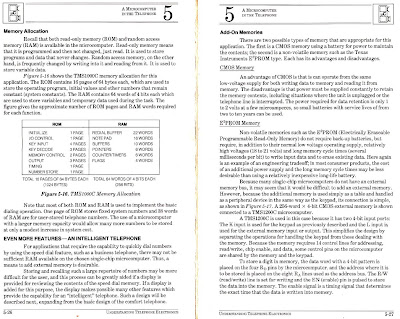
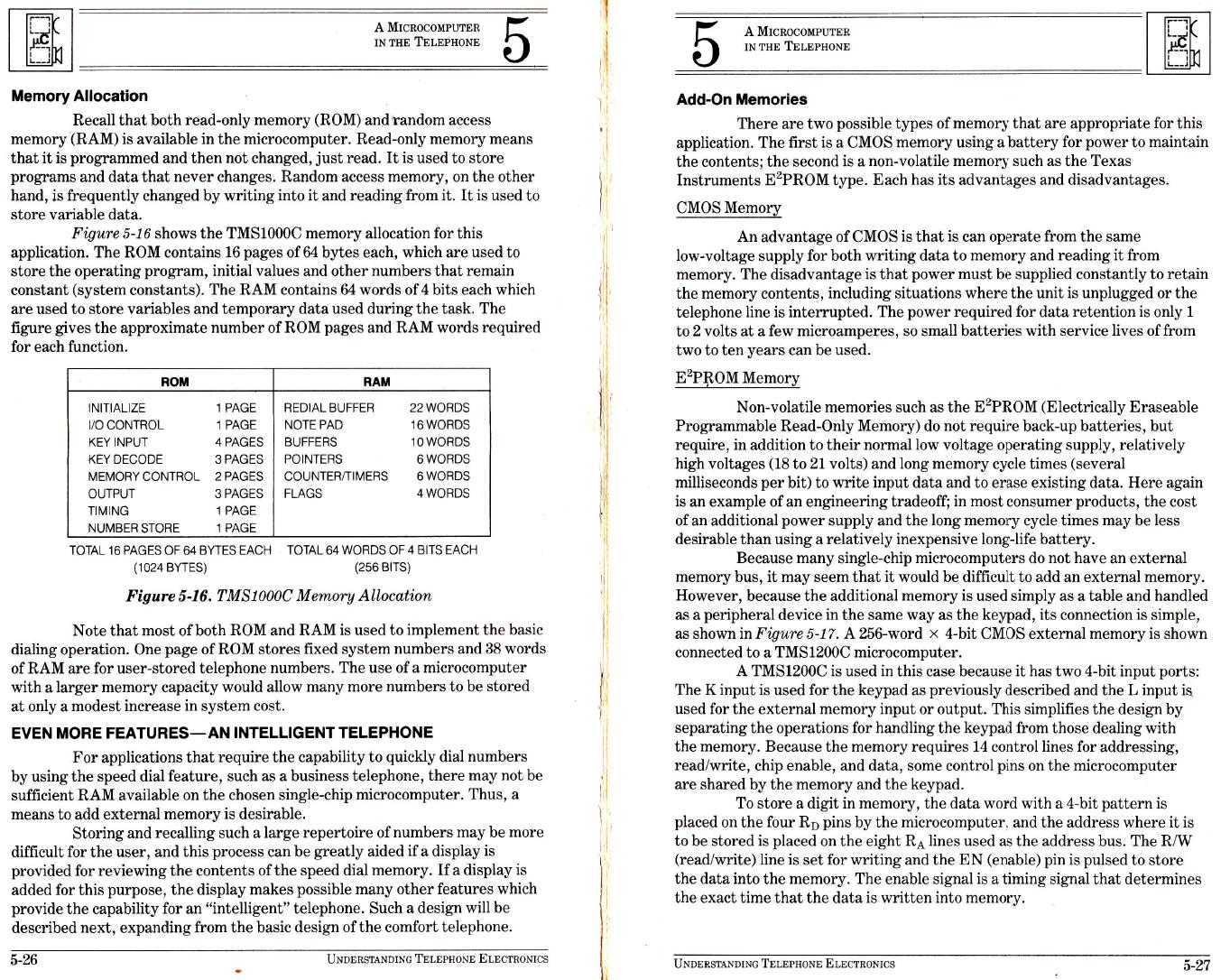
Below are some selected pages discussing ways to create memory storage and access to it from that book which provides, in a nutshell, a useful exemplar how data retention could be created and managed within early electronic telephones. It is worth reading because a mobile phone examiner will see familiar issues that are addressed when considering a methodology for acquiring data from (mobile) devices.

Mobile phone forensics requires a level of examiner capability to conduct the examination. The key word 'capability', when analysis is made of what is involved in it, reveals that conducting data acquisition by simply connecting a data reader tool to the target device (mobile phone) today we have significantly moved on from early examination techniques.
The knowledge, skills and experience from my early days telecomms background still serves me well today. When I first started in telecomms type approvals (the procedural path to bringing a telecomms product up to the technical and legal requirements to permit it to connected to the PSTN) the technical standards were important. The technical standards, such as, BS6301 electrical safety, BS6305 network connection, BS6317 apparatus connection and BS6789 apparatus functional features etc provided the grounding to understand what was necessary to succeed. Those standards didn't control how the manufacturer designed to meet each standard's strictures, merely they required to reveal what the product did at the point of, generally speaking, safety, input/output, device specific requirements and functionality and how it met the parameters laid down.
Interestly, designing memory in a device, although seen today as a reference to data storage (ephemeral, tarried or permanent), and thus introduces the notion and prospects of evidence, back then memory was seen as a consumer-friendly feature to create a pyschological attachment between the user and the owned device. Coming from a white goods/brown goods background I had to acquire an understanding/knowledge of not merely the telecomms standards but also the approaches used by manufacturers to meet telecomms standards. Back in 1983 one of the first books I read was Radio Shack "Understanding Telephone Electronics". Electronics, by the way, covered a wide technology design range categorisation including, as a subset of it, computer and computation. Note also that microcomputer was often used in earlier days, to describe manufacturing size and purpose, in comparison today whereas the term 'micro' 'electronic', and 'computer' and used in the term microelectronic computer to describe e.g. a SIM/USIM Card. We also use the term 'smart card' today, as well, but that requires, for discussion at another time, as to what is intended to be communicated by the term 'smart'.
Below are some selected pages discussing ways to create memory storage and access to it from that book which provides, in a nutshell, a useful exemplar how data retention could be created and managed within early electronic telephones. It is worth reading because a mobile phone examiner will see familiar issues that are addressed when considering a methodology for acquiring data from (mobile) devices.

Saturday, September 17, 2011
Arrhenius equation, preserving photos/videos for 100 years
Arrhenius equation, preserving photos/videos for 100 years
Arrhenius acceleration factor and accelerated temperature cycling can be applied to simulate the effects on data retention held within memory devices on their store media. We learn that to determine the relationship between the rate constant (or acceleration factor) and the activation energy and temperature of a reaction can be given by Arrhenius equation expressed as:

In order to assess preservation we are informed, during tests, data can be subjected to "temperatures and activation energies" to determine their retention qualities under the following conditions:
- Ea = Activation Energy = 1.0 ev
- Boltzmann Constant = 8.62*10-5
- Product application temperature used for this test (Ta) = 40ºC
- Product test temperature used for this test (Tt) = 125ºC
- Product's time-to-failure is exponential
- Arrhenius Acceleration Factor = 2721
It is said that using a conservative approach applied to values of "well-known" industry standard numbers for the calculation, and higher stress of 40ºC (typical archival storage temperature of 25°C +/- 10°C), termperature cycle tests performed on n-DUTs (Device Under Test) and accelerated temperature of 125°C applied over x-hours can verify deterioration (thus preservation potential) of data occurs following tests. The output recorded can be simplified with the results entered in an Arrhenius table.
Now the question. Has 100 years has been proven possible? According to recent announcements it is said to be more than possible, devices can achieve this such as SanDisk Memory Vault™. Indeed devices like these are able to store photos and videos for 104 years, apparently.
I thought the information might be useful to discuss because I heard on BBC radio news that suggestions for firearms officers to wear video cameras to record an incident or operation had some difficulties about storage. The radio news made no further mention about the exact storage difficulties, but if the difficulties involve archive (for large-scale storage) and preservation, might the above information be of some help?
Arrhenius acceleration factor and accelerated temperature cycling can be applied to simulate the effects on data retention held within memory devices on their store media. We learn that to determine the relationship between the rate constant (or acceleration factor) and the activation energy and temperature of a reaction can be given by Arrhenius equation expressed as:
In order to assess preservation we are informed, during tests, data can be subjected to "temperatures and activation energies" to determine their retention qualities under the following conditions:
- Ea = Activation Energy = 1.0 ev
- Boltzmann Constant = 8.62*10-5
- Product application temperature used for this test (Ta) = 40ºC
- Product test temperature used for this test (Tt) = 125ºC
- Product's time-to-failure is exponential
- Arrhenius Acceleration Factor = 2721
It is said that using a conservative approach applied to values of "well-known" industry standard numbers for the calculation, and higher stress of 40ºC (typical archival storage temperature of 25°C +/- 10°C), termperature cycle tests performed on n-DUTs (Device Under Test) and accelerated temperature of 125°C applied over x-hours can verify deterioration (thus preservation potential) of data occurs following tests. The output recorded can be simplified with the results entered in an Arrhenius table.
Now the question. Has 100 years has been proven possible? According to recent announcements it is said to be more than possible, devices can achieve this such as SanDisk Memory Vault™. Indeed devices like these are able to store photos and videos for 104 years, apparently.
I thought the information might be useful to discuss because I heard on BBC radio news that suggestions for firearms officers to wear video cameras to record an incident or operation had some difficulties about storage. The radio news made no further mention about the exact storage difficulties, but if the difficulties involve archive (for large-scale storage) and preservation, might the above information be of some help?
Friday, October 30, 2009
Forensic Science Regulator Report
Forensic Science Regulator Report
.
Did you read this document from the Forensic Science Regulator dated July 2009?
.
Online Google Document:
.
Download .pdf
.
What are your thoughts?
.
Discussion Link
Thursday, August 07, 2008
Staggering figures for mobile phone text and data usage
Staggering figures for mobile phone text and data usage
.The Mobile Data Association (http://www.themda.org/Page_Default.asp), a not-for-profit organisation, that provides accurate and factual statistics relating to mobile telephone usage in UK, publish their findings month-on-month. Examples of published stats for April and May 2008 (http://www.text.it/home.cfm) identify staggering figures for text and data usage in the UK. Moreover, their latest findings reveal a huge upward spike in text messaging and data-based communications, often at the expense of conventional voice calls.
.MDA Chairman, Steve Reynolds, added "There are powerful signs all around that mobile Internet access will supersede traditional PC access. The MDA predicts that mobile Internet will become a true rival for traditional desktop internet access." Steve Reynolds comments will further underpin how mobile device wireless data communcations are replacing fixed computer systems.
.
UK Figures for SMS Text Messages (Sent):
May 2008 - 6.5 billion
April 2008 - 6.3 billion
.
UK Figures for Mobile Internet (WAP Users):
May 2008 - 16.43 million
April 2008 - 17.46 million
.
UK Figures for Picture Messaging (Sent):
May 2008 - 46.52 million
April 2008 - 47.13 million
.
The UK possibly has, when measured alongside other countries, the most highly developed mobile phone communication usage in the World, or at least in the Western World, and is producing statistics that do not suggest there is a UK or even a global "downturn" or "recession" when it comes to mobile traffic.
.
From an evidental point of view these statistics and trends shine a very bright torchlight on how underfunded the UK criminal justice legal aid system really is, particularly for experts (like myelf) when I am working for the defence, and particularly so in the Captial where most of the technology crimes takes place. Put simply, we could reach a stage in the criminal justice system where technology is wrongly used to accuse an individual or is used in a crime and in such manner that it wont be properly assessed or scrutinised due to underfunding that much crime using the technology goes undetected and unrecognised by the courts thus perpetrators become immune to prosecution also.
Sunday, November 26, 2006
Phone Tap Data as evidence
Interesting article in The Independent Online newspaper, headed "Reid wary of phone tap data as evidence."
http://news.independent.co.uk/uk/politics/article2010026.ece
http://news.independent.co.uk/uk/politics/article2010026.ece
Monday, November 20, 2006
Mobile Telephone Forensics
Mobile Telephone Forensics
Mobile telephones are small devices and commonly, due to misunderstanding and lack of appreciation of the brilliant work that goes into making a mobile telephone and SIM Card operate, are relegated to a lower standard of investigation. Yet, with mobile telephones primary radio capability, with solid-state electronics to back it up, enables them to punch, pound for pound, way above their weight when measured in terms of multifunctional computers or laptops.
This makes mobile telephone forensics an exciting branch of forensic science, but it does mean taking time and a dedication to comprehend. Consider the wireless and connectivity of a mobile telephone and it may surprise many what is incorporated into these mobile devices.
We commonly think of mobiles defined by their wireless service they use, such as GSM GPRS 3G etc, which are of course very important to mobile 'phone forensics. However, behind that sits a myriad of connectivity from which data can be generated and provide equally importance evidence. A footprint, if you will, that needs to be considered. For instance, what impact it has in relation to how data got to be there, what affect and effect it has regarding evidence and whether the proposition of what the evidence means can be correlated to the connectivity in question.
If SMS text messages were the only evidence to be considered then it would be understandable that connectivity would be rather a moot point. But given the fact mobile telephones have come on leaps and bounds with the introduction of Symbian based systems and java technology etc isolating SMS text messages is no longer an option. EMS and MMS play an important part in evidence, as do emails, videos etc. Indeed, transporting data wirelessly between devices through close-range communications equally means that connectivity cannot be ignored within the forensic investigation. The possible paths how data are populated in mobile device requires identification, in order to be able to comprehend the overall picture how the devices have or can be used.
- WAP 1.0, 2.0
- Bluetooth v.1.0, v.2.0
- GPRS class 10 EGPRS (Class B, Multislot class 11)
- E-mail protocols: SMTP, POP3, IMAP4 - attachments
- MMS
- Synchronization via Bluetooth or a cable SyncML
- SMIL
- USB 1.0, 2.0 via Pop-Port
- PoC or PTT
- Instant Messaging
- VideoCall
- WiFi (WLAN)
Above are just some of the connectivity technologies in use today in mobile telephones. Look, comprehend and consider is the name of the game with mobile 'phone forensics. For each heading shown above, each has its own subset standards and guidelines. It is not difficult to see why mobile telephones are very smart phones indeed.
Mobile telephones are small devices and commonly, due to misunderstanding and lack of appreciation of the brilliant work that goes into making a mobile telephone and SIM Card operate, are relegated to a lower standard of investigation. Yet, with mobile telephones primary radio capability, with solid-state electronics to back it up, enables them to punch, pound for pound, way above their weight when measured in terms of multifunctional computers or laptops.
This makes mobile telephone forensics an exciting branch of forensic science, but it does mean taking time and a dedication to comprehend. Consider the wireless and connectivity of a mobile telephone and it may surprise many what is incorporated into these mobile devices.
We commonly think of mobiles defined by their wireless service they use, such as GSM GPRS 3G etc, which are of course very important to mobile 'phone forensics. However, behind that sits a myriad of connectivity from which data can be generated and provide equally importance evidence. A footprint, if you will, that needs to be considered. For instance, what impact it has in relation to how data got to be there, what affect and effect it has regarding evidence and whether the proposition of what the evidence means can be correlated to the connectivity in question.
If SMS text messages were the only evidence to be considered then it would be understandable that connectivity would be rather a moot point. But given the fact mobile telephones have come on leaps and bounds with the introduction of Symbian based systems and java technology etc isolating SMS text messages is no longer an option. EMS and MMS play an important part in evidence, as do emails, videos etc. Indeed, transporting data wirelessly between devices through close-range communications equally means that connectivity cannot be ignored within the forensic investigation. The possible paths how data are populated in mobile device requires identification, in order to be able to comprehend the overall picture how the devices have or can be used.
- WAP 1.0, 2.0
- Bluetooth v.1.0, v.2.0
- GPRS class 10 EGPRS (Class B, Multislot class 11)
- E-mail protocols: SMTP, POP3, IMAP4 - attachments
- MMS
- Synchronization via Bluetooth or a cable SyncML
- SMIL
- USB 1.0, 2.0 via Pop-Port
- PoC or PTT
- Instant Messaging
- VideoCall
- WiFi (WLAN)
Above are just some of the connectivity technologies in use today in mobile telephones. Look, comprehend and consider is the name of the game with mobile 'phone forensics. For each heading shown above, each has its own subset standards and guidelines. It is not difficult to see why mobile telephones are very smart phones indeed.
Saturday, November 18, 2006
Motorla A1000
Motorola A1000
A problem that has been noted with the A1000 is that the handset itself can bounce into auto reset and lose data: images, SMS, contacts, videos etc are wiped from the handset memory. One cause for to this problem - where the handset has been re-charged and leaving the charger switched ON and booting up the handset can cause this to happen. It is an intermittent fault apparently.
Another is, attempting to back-up data by transferring data to a computer it has been noted an error message can occur stating:
"Backup Error: Failed to analyse differences between the handset and the PC (0x8000ffff)"
loss of data on some handsets has been noted.
Re-flashing the handsets may solve these problems (but the previously stored data following both instances above might be lost). This doesn't assist the examiner though if these events occur whilst examining an exhibit.
Remember to note it down, that where a device under test (DUT) is known to have problems to refer to the known problems in examination notes.
A problem that has been noted with the A1000 is that the handset itself can bounce into auto reset and lose data: images, SMS, contacts, videos etc are wiped from the handset memory. One cause for to this problem - where the handset has been re-charged and leaving the charger switched ON and booting up the handset can cause this to happen. It is an intermittent fault apparently.
Another is, attempting to back-up data by transferring data to a computer it has been noted an error message can occur stating:
"Backup Error: Failed to analyse differences between the handset and the PC (0x8000ffff)"
loss of data on some handsets has been noted.
Re-flashing the handsets may solve these problems (but the previously stored data following both instances above might be lost). This doesn't assist the examiner though if these events occur whilst examining an exhibit.
Remember to note it down, that where a device under test (DUT) is known to have problems to refer to the known problems in examination notes.
Subscribe to:
Posts (Atom)